
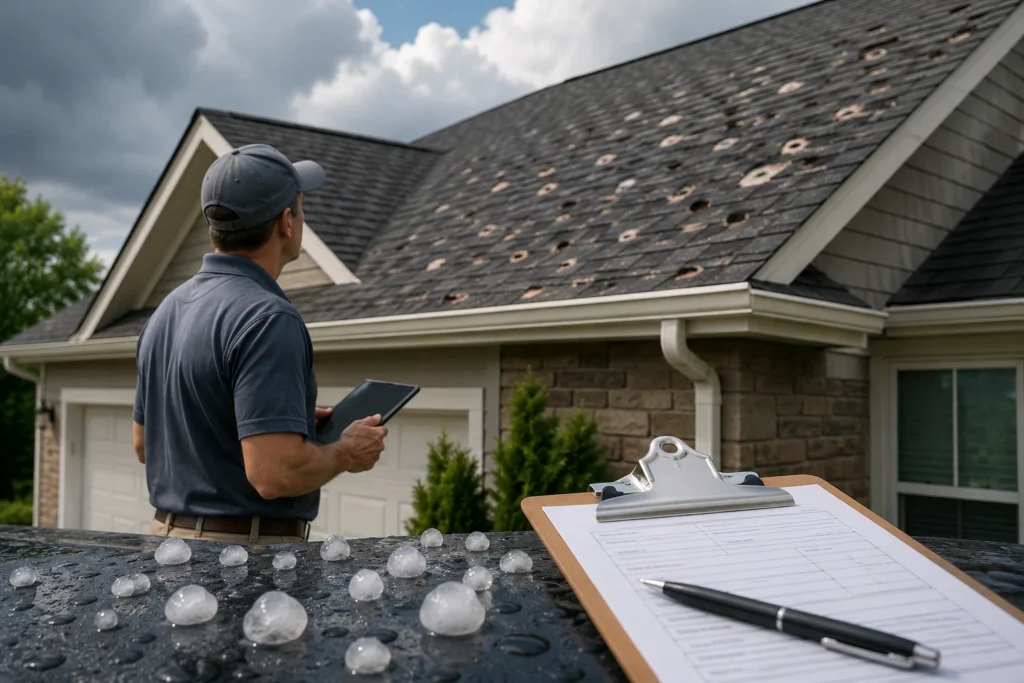
Storms can pass in a matter of minutes, yet the damage they leave behind may affect a home for months. Hail is especially unpredictable. One neighborhood may experience only minor cosmetic damage, while another sees roofs, gutters, siding, and windows battered by large ice stones. After the storm clears, homeowners often assume their insurance claim will be straightforward. Unfortunately, that isn’t always the case. Differences in repair estimates, disagreements over the extent of the damage, and conflicting opinions about replacement costs can all create unexpected roadblocks. That’s where an appraisal for hail damage claim becomes an important tool. Rather than allowing a disagreement to drag on indefinitely, the appraisal process provides a structured method for determining the value of a covered loss. For homeowners in Desoto, understanding this process before a dispute arises can make navigating a claim much less stressful.
Many people don’t think about the appraisal clause until they receive an insurance estimate that falls well below what a roofing contractor believes is necessary. Others discover that only part of their roof is approved for repairs even though they expected a complete replacement. These situations can be frustrating, especially after investing years into maintaining a home. Fortunately, an appraisal isn’t about proving who is right or wrong. Instead, it focuses on reaching a fair valuation based on the available evidence and the condition of the property. Whether your claim involves cracked shingles, dented metal components, damaged siding, or hidden moisture intrusion, understanding the appraisal process can help you make informed decisions. This guide explains what an appraisal is, why hail claims frequently lead to disagreements, how the process works, and what homeowners can do to strengthen their position before the appraisal even begins.
What Is an Appraisal for a Hail Damage Claim?
The word “appraisal” often brings to mind real estate transactions, where a professional estimates the market value of a home before it is bought or sold. An insurance appraisal serves an entirely different purpose. An appraisal for a hail damage claim is a dispute resolution process included in many homeowners insurance policies. It is designed to resolve disagreements over the amount of a covered loss, not whether the insurance policy provides coverage in the first place.
That distinction is critical. Imagine that both you and your insurance company agree your roof sustained hail damage. The disagreement isn’t about whether the storm caused damage. Instead, it centers on how much money is reasonably required to repair or replace the affected portions of the property. An appraisal is intended to answer that question. Most appraisal clauses follow a similar process. Each party selects an independent appraiser. If those appraisers cannot agree on the value of the loss, they jointly choose a neutral umpire. Once any two members of the appraisal panel agree on the amount, that figure generally becomes binding under the terms of the insurance policy. Because appraisal focuses on valuation instead of legal disputes, it often provides a faster and more cost-effective alternative to litigation.
Why Hail Damage Claims Frequently Lead to Disputes
Every hailstorm is different, and so is every property. Two homes on the same street may experience very different levels of damage depending on roof orientation, surrounding trees, roofing materials, and the size and direction of the hailstones. These differences alone can create varying repair recommendations.
Disagreements often begin when multiple professionals inspect the same roof. A roofing contractor may conclude that hail impacts have compromised enough shingles to justify a full roof replacement. An insurance adjuster, however, may determine that only one roof slope requires repair. Both inspections may be conducted professionally, yet each reaches a different conclusion.
Several other factors contribute to valuation disputes. Older roofs naturally weather over time, making it more difficult to distinguish fresh storm impacts from ordinary aging. Roofing products may also be discontinued, preventing exact material matches. Updated building codes can increase repair costs, and damage beneath shingles may remain hidden until repairs begin.
Common causes of appraisal disputes include:
- Partial versus full roof replacement
- Matching issues with discontinued roofing products
- Hidden structural damage
- Different labor and material pricing
- Local code upgrade requirements
- Overlooked damage to gutters or flashing
- Interior water intrusion discovered after the initial inspection
- Conflicting contractor estimates
These disagreements don’t necessarily mean one party acted unfairly. In many cases, they simply reflect different interpretations of the available evidence.
| Homeowner’s View | Insurance Company’s View |
| Complete roof replacement is needed | Localized repair is sufficient |
| Multiple damaged components | Limited storm-related damage |
| Contractor pricing reflects current market | Standard estimating software determines pricing |
| Additional hidden damage expected | Visible damage only included |
Understanding why these differences occur helps homeowners approach the appraisal process with realistic expectations.
Common Factors That Influence the Value of a Claim
No two appraisal cases are identical. Appraisers evaluate many variables before determining the value of a hail damage claim. Some are obvious, while others require a much closer examination.
Roof Age
A newer roof and a twenty-year-old roof often respond differently to the same hailstorm. Existing wear doesn’t automatically eliminate coverage, but it may influence how damage is evaluated.
Roofing Material
Asphalt shingles, standing seam metal, tile, slate, and stone-coated steel roofing systems each react differently to hail impacts. The repair approach varies depending on the material.
Severity of the Storm
Not all hailstorms produce the same level of damage. Stone size, wind speed, storm duration, and impact direction all affect the condition of the roofing system.
Availability of Materials
Manufacturers discontinue products regularly. If replacement shingles are no longer available, determining a reasonable repair method may become more complex.
Local Building Requirements
Repairs often must comply with current construction standards, even if the roof was installed years earlier. Updated requirements can increase labor and material costs.
Supporting Documentation
Photographs, contractor reports, weather records, inspection notes, and repair estimates all contribute to a stronger evaluation. The more complete the documentation, the easier it becomes to understand the true scope of the loss.
How the Insurance Appraisal Process Works
Although insurance companies may use different forms or administrative procedures, the appraisal process generally follows the same sequence. Understanding each step helps remove uncertainty and allows homeowners to prepare more effectively.
Step 1: Review the Insurance Policy
Everything begins with the insurance contract.
Before requesting appraisal, carefully review your homeowner’s policy to determine whether it includes an appraisal clause and understand any deadlines that may apply.
Important items to review include:
- Appraisal clause language
- Time limits
- Written notice requirements
- Cost-sharing provisions
- Appraiser qualifications
- Umpire selection procedures
Skipping this step can lead to unnecessary delays or procedural mistakes.
Step 2: Submit a Written Appraisal Request
When negotiations reach a standstill, either the homeowner or the insurance company may invoke the appraisal clause. The request is usually made in writing. The notice should comply with the policy requirements and clearly communicate the intention to begin the appraisal process. Once submitted properly, both parties begin selecting their appraisers.
Step 3: Each Side Chooses an Independent Appraiser
Each party appoints an appraiser with experience evaluating property damage and estimating repair costs.
A qualified appraiser should possess practical knowledge of:
- Residential roofing systems
- Storm damage identification
- Construction estimating
- Building materials
- Local labor costs
- Insurance claim valuation
- Repair methodologies
- Applicable building requirements
Although each appraiser is selected by one party, professionalism and objective analysis remain essential throughout the process.
Step 4: Selecting the Umpire
If the two appraisers disagree about the amount of the loss, they work together to select an impartial umpire. The umpire serves as an independent third party. Their role isn’t to replace the appraisers but to resolve only those issues where the appraisers remain unable to agree. Choosing an experienced umpire is important because their opinion may ultimately determine portions of the final award.
Step 5: Property Inspection
Once the appraisal panel is established, inspections begin. This is one of the most important stages of the entire process because the final valuation depends heavily on the observations made during the inspection.
Appraisers commonly examine:
- Roof surfaces
- Ridge caps
- Flashing
- Gutters
- Downspouts
- Chimneys
- Skylights
- Roof vents
- Fascia
- Soffits
- Siding
- Windows
- Garage doors
- Air conditioning units
- Exterior lighting
- Interior ceilings
- Attic spaces
- Evidence of water intrusion
Rather than focusing on a single damaged area, the inspection evaluates the property as a complete system. Small pieces of evidence found across different components often help establish the overall severity of the hail event.
Step 6: Estimate Comparison
After completing their inspections, each appraiser prepares an independent estimate. These estimates frequently differ. One appraiser may recommend replacing an entire roof system, while another believes repairs are sufficient.
During this stage, appraisers compare:
- Material quantities
- Labor costs
- Waste calculations
- Roofing accessories
- Flashing replacement
- Ventilation components
- Code upgrades
- Equipment pricing
- Cleanup costs
Professional discussions often resolve many of these differences before the umpire becomes involved. When both appraisers rely on detailed inspections and thorough documentation, reaching common ground becomes much more likely.
Step 7: Reaching the Appraisal Award
After reviewing the inspection findings and comparing estimates, the appraisers attempt to agree on the value of the loss. If they reach a consensus, the process moves quickly toward a written appraisal award. When disagreements remain, the umpire reviews only the disputed items rather than starting the entire process over. The umpire considers the documentation, inspection findings, repair estimates, and the reasoning presented by both appraisers before making a decision.
In many policies, an agreement signed by any two members of the appraisal panel either both appraisers or one appraiser and the umpire becomes the official appraisal award. While this award typically resolves the dispute over the amount of the loss, homeowners should remember that it generally addresses valuation rather than broader questions about policy coverage.
What Does the Appraiser Actually Look For?
Many homeowners are surprised by how detailed an appraisal inspection can be. An experienced appraiser doesn’t simply climb onto the roof, glance around for a few minutes, and leave. Instead, the inspection often involves evaluating nearly every exterior component that could have been affected by the hailstorm.
The roof naturally receives the greatest attention. Appraisers inspect shingles for bruising, cracks, punctures, displaced granules, fractured seal strips, lifted edges, and other impact-related damage. On metal roofs, they look for dents, deformation, coating damage, and compromised fasteners that may affect long-term performance.
However, hail damage rarely stops at the roofing material.
Appraisers frequently inspect:
- Gutters
- Downspouts
- Roof flashing
- Ridge caps
- Roof vents
- Skylights
- Chimneys
- Window screens
- Window trim
- Garage doors
- Exterior siding
- Air conditioning condenser units
- Solar panels
- Deck coverings
- Outdoor lighting
- Fences
- Mailboxes
Damage to soft metals is particularly valuable because dents often remain visible long after roofing materials begin to weather. These impacts can help establish the intensity and direction of the storm. Understanding concepts such as anisotropy the property of materials behaving differently depending on direction—can even help explain why certain roofing materials respond differently to hail impacts than others.
Documents That Strengthen Your Appraisal Case
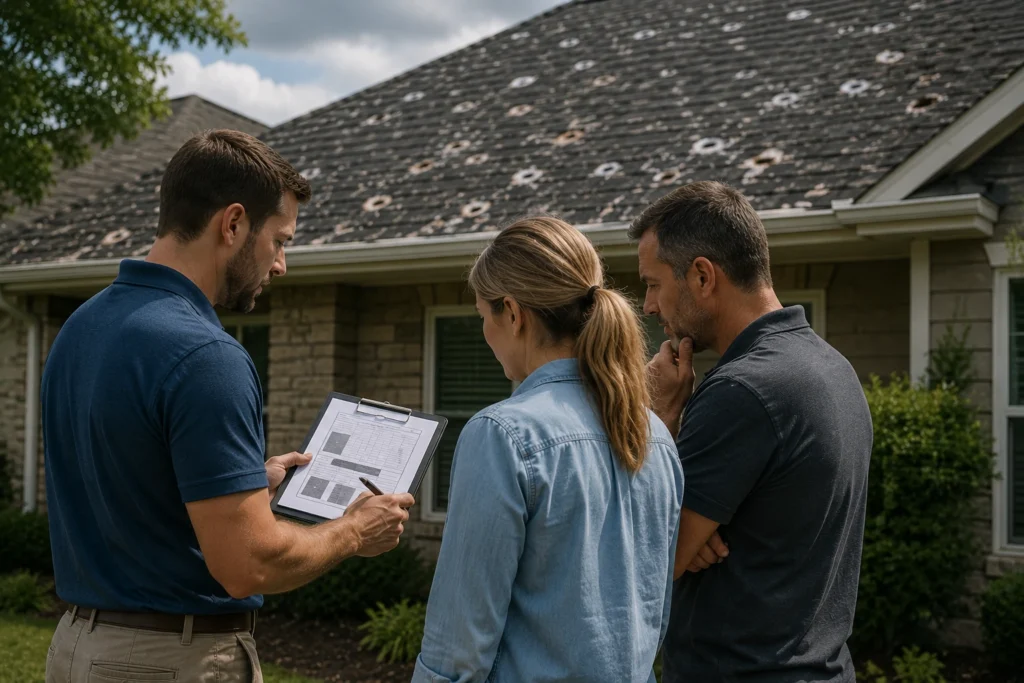
The appraisal process relies heavily on evidence. Clear, organized documentation allows appraisers to evaluate the claim more efficiently and reduces uncertainty when estimating repair costs. Homeowners who prepare comprehensive records often find it easier to explain why they believe additional compensation is warranted. One estimate alone rarely tells the complete story. Supporting documentation should include information from multiple reliable sources whenever possible.
Recommended documents include:
- Homeowners insurance policy
- Original insurance estimate
- Contractor repair estimates
- Independent roofing inspection reports
- Professional engineering reports, if available
- Drone inspection photographs
- Ground-level photographs
- Close-up damage images
- Weather reports confirming hail activity
- Previous maintenance records
- Emergency repair invoices
- Temporary mitigation receipts
- Correspondence with the insurance company
- Notes from inspections and meetings
Keeping both digital and printed copies helps prevent information from being lost if additional documentation is requested later.
Creating a Strong Claim File
Organization matters just as much as the documents themselves. Rather than storing photographs on multiple devices and estimates in separate folders, create a single claim file containing every record associated with the loss.
A well-prepared file may include:
| Document | Purpose |
| Insurance policy | Confirms policy provisions |
| Initial claim estimate | Establishes the insurer’s valuation |
| Contractor estimate | Provides an independent repair opinion |
| Roof inspection report | Documents observed damage |
| Photographs | Shows the property’s condition |
| Weather records | Verifies storm activity |
| Communication log | Tracks important conversations |
| Repair invoices | Documents completed mitigation work |
Keeping everything organized saves time during the appraisal process and allows both appraisers to review the evidence more efficiently.
Understanding the Role of the Umpire
The umpire serves as the neutral voice in the appraisal process. Contrary to what many homeowners believe, the umpire doesn’t automatically inspect every property or participate in every decision. Instead, the umpire becomes involved only when the two appraisers cannot resolve specific disagreements.
For example, both appraisers may agree that the gutters require replacement but disagree about whether the roof should be repaired or replaced entirely. Rather than reviewing every aspect of the claim again, the umpire focuses on the disputed items.
An effective umpire demonstrates:
- Independence
- Construction knowledge
- Insurance appraisal experience
- Analytical thinking
- Professional integrity
- Strong communication skills
- Fair decision-making
Because the umpire remains neutral, both parties generally have confidence that disputed issues receive an unbiased review.
Appraisal vs. Mediation vs. Litigation
Homeowners sometimes assume every insurance disagreement eventually ends in court. Fortunately, that isn’t always the case. Different dispute resolution methods exist for different situations, and understanding their differences can help homeowners choose the most appropriate path.
| Appraisal | Mediation | Litigation |
| Resolves valuation disputes | Encourages negotiated settlement | Resolves legal disputes in court |
| Independent appraisers determine value | Neutral mediator facilitates discussion | Judge or jury decides outcome |
| Usually faster | Timeline varies | Often takes the longest |
| Generally lower cost | Moderate expense | Usually the most expensive |
| Focuses on repair value | Focuses on compromise | Addresses legal rights and coverage |
If everyone agrees that hail damage is covered but disagrees about repair costs, appraisal often provides an efficient solution. If the dispute involves policy interpretation or a complete denial of coverage, litigation or other legal remedies may become necessary.
Benefits of Using the Appraisal Process
For many homeowners, appraisal provides an effective middle ground between prolonged negotiations and expensive lawsuits. One of its greatest strengths is objectivity. Instead of relying solely on opposing repair estimates, both parties submit the dispute to experienced professionals who evaluate the evidence independently.
Additional advantages include:
- Faster resolution than many court cases
- Independent evaluation by experienced professionals
- Greater focus on repair costs rather than legal arguments
- Reduced legal expenses
- Opportunity to resolve disputes outside of court
- More confidence in the final valuation
- Structured decision-making process
The process also encourages thorough inspections. Because both appraisers know their conclusions may be reviewed by an umpire, detailed documentation and careful analysis become especially important. For homeowners dealing with significant hail losses, that additional level of scrutiny often provides reassurance that the claim receives the attention it deserves.
Potential Drawbacks to Consider
Although appraisal offers many advantages, it is not the perfect solution for every insurance dispute. Like any formal process, it comes with costs, time commitments, and practical limitations. Each party generally pays for its own appraiser, while umpire fees are commonly divided between both sides. Complex claims involving extensive inspections or multiple damaged structures may increase those expenses. Homeowners should also understand that appraisal does not determine whether damage is covered under the policy. Instead, it focuses on establishing the value of damage that is already considered covered.
Potential drawbacks include:
- Appraiser fees
- Shared umpire expenses
- Scheduling delays
- Time needed to gather documentation
- Limited opportunities to challenge the final valuation
- Inability to resolve policy coverage disputes
- Additional inspections before a decision is reached
Even with these considerations, appraisal remains one of the most effective methods for resolving disagreements over the value of storm damage. Entering the process with realistic expectations, strong documentation, and a clear understanding of its purpose can significantly improve the overall experience and lay the groundwork for a fair resolution.
Common Mistakes Homeowners Make During a Hail Damage Appraisal
Even a strong claim can lose momentum when avoidable mistakes occur. The appraisal process is designed to evaluate evidence objectively, but missing records, rushed decisions, or misunderstandings about the policy can complicate matters.
One of the biggest mistakes is waiting too long to act. Some homeowners assume negotiations will eventually resolve themselves, only to discover that policy deadlines have passed. Others delay inspections, allowing weather exposure or temporary repairs to change the appearance of the damage. Another common issue is incomplete documentation. A few photographs taken from the ground rarely tell the whole story. High-quality images from multiple angles, inspection reports, weather documentation, and written estimates provide a much stronger foundation during an appraisal.
Avoid these common pitfalls:
- Waiting too long to review the insurance policy
- Failing to document damage immediately after the storm
- Discarding damaged roofing materials before inspections
- Making permanent repairs too early
- Relying on only one repair estimate
- Ignoring interior signs of water intrusion
- Missing important claim deadlines
- Assuming the first settlement offer is final
Avoiding these mistakes won’t guarantee a higher settlement, but it can help ensure the appraisal panel has the information needed to accurately evaluate the loss.
How a Public Adjuster Can Help With an Appraisal for Hail Damage Claim
Although homeowners can participate in the appraisal process themselves, many choose to seek professional guidance when the claim involves significant damage or complex valuation issues. A public adjuster works on behalf of the policyholder rather than the insurance company. Their role is to evaluate the damage independently, interpret relevant portions of the insurance policy, organize documentation, and help present a well-supported claim.
Services often include:
- Comprehensive property inspections
- Independent repair estimates
- Detailed damage documentation
- Policy review
- Claim organization
- Communication with insurance representatives
- Assistance throughout the appraisal process
In larger or more complicated losses, a Property Damage Adjuster may also coordinate with roofing contractors, engineers, or other specialists to ensure that all affected components are identified and properly documented. This collaborative approach can help create a more complete picture of the loss before the appraisal panel begins its review. For many property owners in Desoto, having experienced claim support can make the process easier to understand while improving the organization of the information presented during the appraisal.
Questions to Ask Before Starting an Appraisal
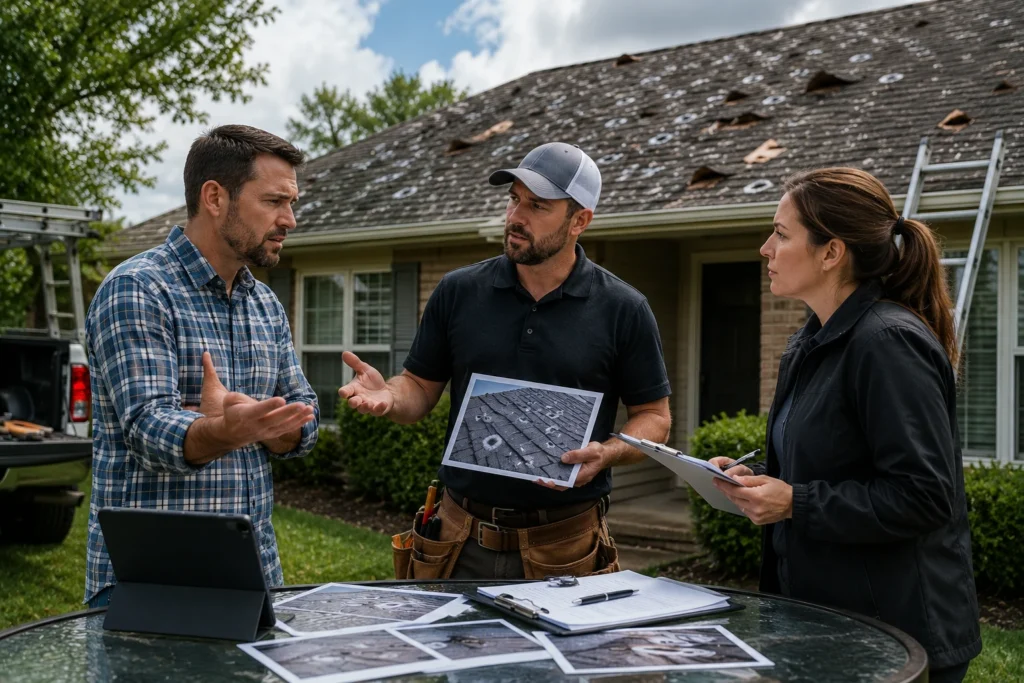
An appraisal should never be started simply because negotiations become frustrating. Before invoking the appraisal clause, homeowners should ask several important questions to determine whether it is the right path.
Consider asking:
- Does my insurance policy include an appraisal clause?
- Is the disagreement about the value of the damage or about coverage?
- Have I obtained independent repair estimates?
- Do I have enough documentation to support my position?
- How much will my appraiser cost?
- Who pays for the umpire?
- What deadlines apply under my policy?
- How long is the appraisal process likely to take?
The answers to these questions can help homeowners make informed decisions and avoid unnecessary delays.
When Is an Appraisal the Right Choice?
Not every hail claim requires appraisal. In some situations, additional communication between the homeowner, contractor, and insurance company resolves the disagreement without any formal dispute process.
However, appraisal may be appropriate when:
- Both parties agree the damage is covered but disagree on the repair cost.
- Multiple contractor estimates differ significantly from the insurance company’s valuation.
- The claim involves substantial roof damage after a severe hailstorm.
- Matching materials are no longer available.
- Hidden damage is discovered after the initial inspection.
- Commercial or high-value residential properties require extensive repairs.
- Negotiations have reached a standstill despite supporting documentation.
Choosing appraisal simply because a homeowner is dissatisfied with an estimate may not always be appropriate. The process is most effective when the dispute centers on the amount of a covered loss rather than broader questions about policy interpretation.
Practical Tips for Preparing Before the Inspection
Preparation can have a significant impact on how efficiently the appraisal process moves forward.
Before the appraisers arrive, consider taking a few practical steps:
- Organize all claim-related documents in one location.
- Label photographs with the dates they were taken.
- Keep copies of every estimate and invoice.
- Prepare a written timeline of the claim.
- Make damaged areas safely accessible when possible.
- Avoid making additional permanent repairs unless necessary to prevent further damage.
- Save receipts for emergency mitigation work.
It can also be helpful to walk around the property beforehand and note any areas that concern you. While the appraisers will conduct their own independent inspection, pointing out locations where damage first appeared or where leaks developed after the storm may help ensure those areas receive careful attention. Good preparation does not influence the outcome unfairly it simply allows the appraisal panel to evaluate the property using complete and organized information.
Final Thoughts
Disagreements over hail damage claims are more common than many homeowners expect. Differences in inspection findings, repair methods, material pricing, and the scope of damage can all lead to substantially different estimates. Fortunately, the appraisal process provides a structured method for resolving valuation disputes without immediately resorting to lengthy court proceedings.
An appraisal for hail damage claim is not designed to determine fault or rewrite the terms of an insurance policy. Instead, it focuses on establishing the value of a covered loss through independent evaluation by qualified professionals. When supported by thorough documentation, detailed inspections, and clear communication, the process can provide homeowners with greater confidence that the damage has been carefully assessed. Whether the claim involves a few damaged roof sections or widespread storm-related destruction, preparation remains one of the most valuable tools available. Taking photographs immediately after the storm, maintaining organized records, obtaining qualified inspections, and understanding the language of your insurance policy all contribute to a stronger claim.
For homeowners in Desoto and surrounding communities, severe hailstorms are an unfortunate reality. While no one can prevent the weather, you can prepare for what comes afterward. Learning how the appraisal process works, recognizing when it may be appropriate, and seeking experienced guidance when necessary can help you navigate insurance disputes with greater clarity and confidence. Ultimately, every insurance claim is unique. Policies differ, storm damage varies from one property to another, and repair costs change over time. By approaching an appraisal with realistic expectations, reliable documentation, and a commitment to understanding the process, homeowners place themselves in a stronger position to pursue a fair and well-supported resolution after a damaging hailstorm.
FAQs
An appraisal for a hail damage claim is a process used to resolve disagreements between a homeowner and an insurance company about the value of covered storm damage.
You may consider requesting an appraisal when both parties agree the damage is covered but disagree on the cost of repairs or replacement.
No. An appraisal generally determines the amount of the covered loss, not whether the insurance policy provides coverage.
The homeowner and the insurance company each choose their own independent appraiser, who then attempt to agree on the value of the loss.
If they cannot reach an agreement, they select a neutral umpire, and any two members of the panel can determine the final appraisal award.
Helpful documents include your insurance policy, repair estimates, inspection reports, photographs, weather records, and correspondence related to the claim.
You should only make emergency repairs necessary to prevent further damage and document everything before completing permanent repairs whenever possible.
In many cases, yes. Appraisal is often a quicker and less expensive way to resolve disputes over the value of hail damage.
Yes. A public adjuster can help document the damage, review your policy, prepare estimates, and support you throughout the appraisal process.
Many insurance policies state that an appraisal award agreed upon by two members of the appraisal panel is binding regarding the amount of the loss.