
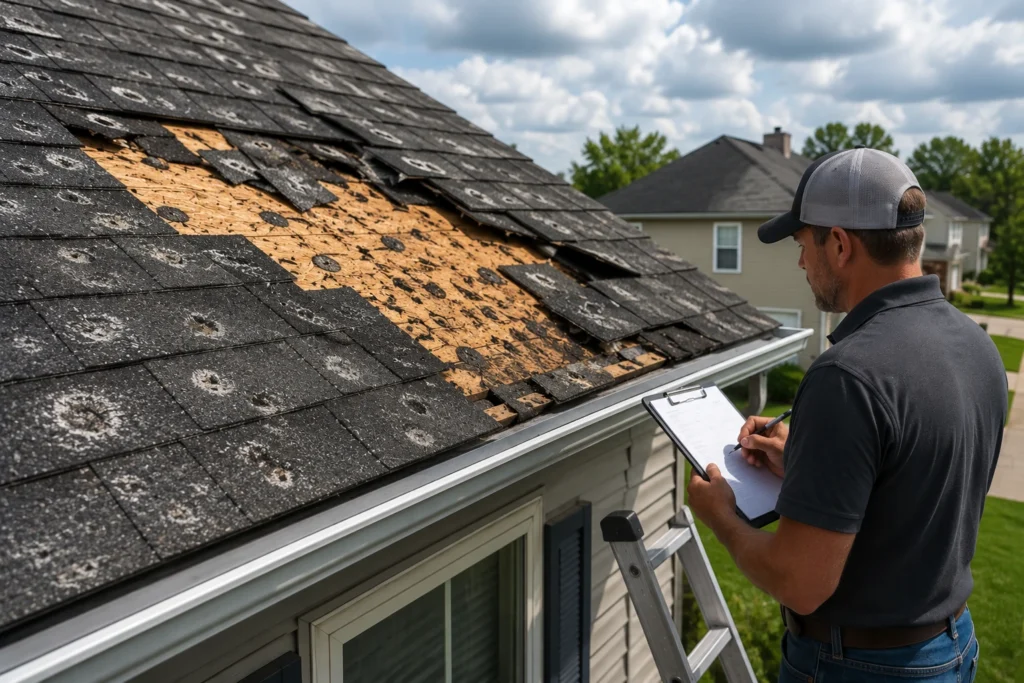
Hailstorms can leave behind more damage than most homeowners realize, and one of the most common questions after a settlement is, can you reopen a hail damage insurance claim? The answer is often yes but only under certain circumstances. Many people assume that once the insurance company issues payment, the file is permanently closed. In reality, newly discovered damage, overlooked repairs, or additional documentation may justify reopening the claim. If you own a home in Desoto or another area prone to severe weather, understanding your options can help you avoid paying significant repair costs out of pocket.
Insurance claims rarely follow a perfectly straight path. A roof may appear repairable during the initial inspection, only for a contractor to discover damaged decking once shingles are removed. Interior stains might not appear until weeks after the first rainfall. Metal components may hide subtle hail impacts that gradually develop into corrosion or leaks. These situations are more common than many homeowners expect, which is why insurance policies often contain procedures for supplemental or reopened claims. The challenge is timing. Insurance companies generally expect policyholders to report additional damage promptly and provide evidence showing why the original claim should be reviewed again. Waiting months or years without documentation can make reopening much more difficult. On the other hand, homeowners who act quickly and keep detailed records often place themselves in a much stronger position.
Every policy contains different conditions, deadlines, exclusions, and claim procedures. State laws may also affect how long you have to request additional compensation. Because of these differences, it’s important to evaluate your individual policy instead of assuming every insurance company handles reopened claims the same way. Fortunately, reopening a claim isn’t about arguing with an insurer for the sake of receiving more money. Instead, it’s about ensuring that all covered damage is identified, properly documented, and fairly evaluated. When new evidence surfaces, requesting another review can be an appropriate and legitimate part of the insurance process.
Before deciding whether your claim deserves another look, it helps to understand how insurance companies classify closed claims, why additional damage is sometimes missed, and what documentation carries the greatest weight during a second review. Many homeowners are surprised to learn that even experienced inspectors can overlook certain forms of hail damage during an initial visit. Roof inspections often occur shortly after a major storm when adjusters are managing hundreds of claims in a short period. While professionals strive to be thorough, hidden or developing damage isn’t always immediately visible. Understanding that reality helps explain why reopened claims exist in the first place. Insurance, after all, relies heavily on evidence, documentation, and systematic evaluation. This structured approach resembles concepts found in Bayesian inference, where conclusions become stronger as additional evidence becomes available. Likewise, when new inspection findings or repair discoveries emerge, they can significantly change how the overall loss is evaluated.
The Short Answer: Yes, In Many Situations You Can Reopen a Hail Damage Insurance Claim
So, can you reopen a hail damage insurance claim after you’ve already received payment? In many cases, yes. Receiving a settlement check does not automatically eliminate every opportunity for additional compensation. Insurance companies recognize that some damage only becomes apparent after repairs begin or after additional inspections uncover problems that were impossible to identify during the initial adjustment.
However, reopening a claim isn’t automatic. Several factors influence whether the insurance company agrees to review the file again, including:
- The language contained in your policy
- State insurance regulations
- How much time has passed
- Whether additional damage is documented
- The quality of supporting evidence
- Whether repairs have already been completed
- Any releases signed during settlement
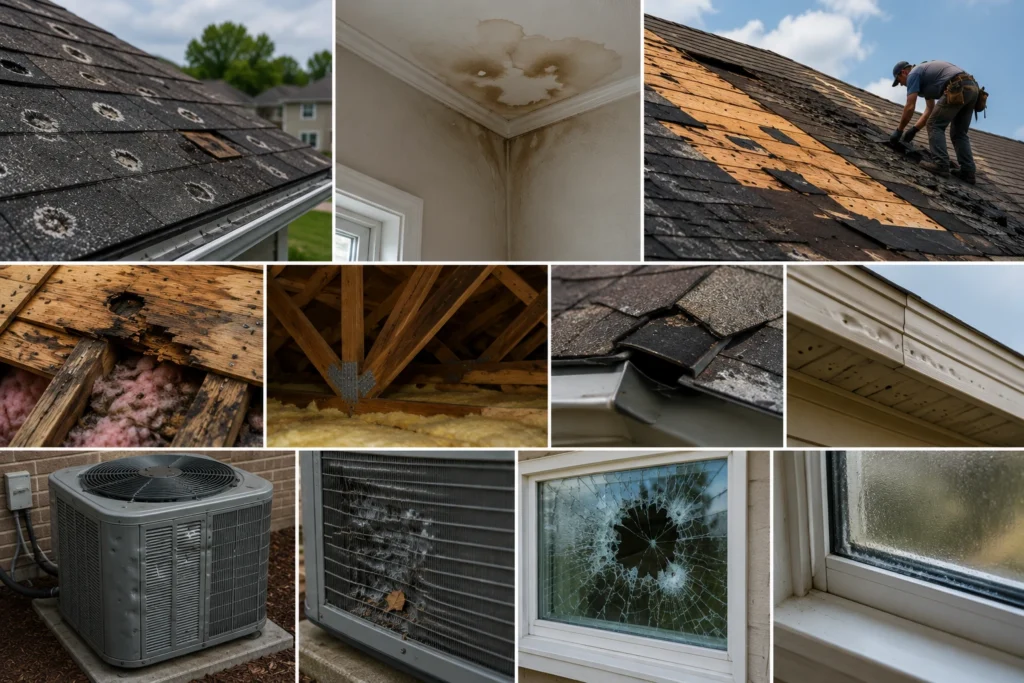
The strongest reopening requests usually involve newly discovered physical damage rather than disagreements over repair pricing alone. For example, imagine your insurance company initially approved replacement of several roof slopes after a hailstorm. Once the roofing contractor removes the shingles, extensive damage to the roof decking becomes visible. Because that deterioration couldn’t be confirmed during the original inspection, it may justify requesting additional benefits under the existing claim.
Similarly, hail impacts to flashing, ridge vents, skylights, gutters, HVAC components, or siding sometimes become evident only after closer examination. These findings can significantly change the overall repair scope. Understanding that possibility helps homeowners avoid assuming the first settlement always represents the final amount owed under the policy.
What Does It Mean to Reopen an Insurance Claim?
The phrase “reopening a claim” often creates confusion. Some people imagine starting the entire claims process over again. That’s usually not what happens. Instead, reopening generally means asking the insurance company to review an existing claim because new information has become available.
That information may include:
- Additional property damage
- Updated contractor estimates
- Engineering reports
- Building code requirements
- Interior water intrusion
- Supplemental repair costs
- Previously hidden structural damage
Rather than filing a completely new claim, the insurance company reexamines the original loss using the newly submitted evidence.
Understanding Closed vs. Reopened Claims
Not every closed claim is truly finished. Insurance companies often classify claims as “closed” simply because no additional activity is occurring at that moment. Administrative closure helps insurers organize files, but it doesn’t necessarily eliminate the possibility of future review.
A reopened claim essentially resumes activity on that existing file. The insurer may assign another adjuster, schedule a second inspection, or request additional documentation before deciding whether further payment is appropriate. Understanding this distinction helps eliminate one of the biggest misconceptions surrounding hail claims.
Administrative Closure vs. Final Settlement
Another important distinction involves administrative closure versus final settlement.
Administrative closure generally means:
- Initial payment has been issued.
- Repairs may still be ongoing.
- Documentation can still be submitted.
- Supplemental requests remain possible.
Final settlement, however, may involve additional legal agreements. If a homeowner signs documents releasing the insurer from future liability related to the loss, reopening becomes considerably more complicated. Even then, every situation should be evaluated individually because policy language and state law can affect the outcome. Never assume your rights have disappeared without carefully reviewing the settlement documents.
When Insurance Companies Consider a Claim Closed
Insurers generally close claims after:
- Payments are completed.
- Required inspections are finished.
- Communication has ended.
- No additional documentation has been submitted.
That doesn’t necessarily mean every covered repair has been identified. Large hail events often generate thousands of claims within a single region. Adjusters work diligently under demanding conditions, but later inspections sometimes reveal damage that wasn’t readily apparent during the initial visit. That’s precisely why supplemental reviews exist.
Common Reasons Homeowners Reopen Hail Damage Claims
Most reopened claims share one characteristic. New information changes the understanding of the original damage. The following situations are among the most common.
Hidden Roof Damage Discovered Later
Roofs consist of multiple layers. Visible shingles represent only the surface.
Once roofing contractors begin removing materials, they may discover:
- Damaged decking
- Saturated underlayment
- Broken fasteners
- Compromised ventilation
- Moisture intrusion
These conditions frequently remain invisible during an exterior inspection. When documented properly, they may justify additional claim consideration.
Interior Water Damage Appears Months Later
Hail doesn’t always create immediate leaks.
Instead, impacts may weaken roofing materials enough that future rainfall gradually allows moisture to penetrate.
Homeowners may later notice:
- Ceiling stains
- Drywall swelling
- Peeling paint
- Mold growth
- Soft flooring
- Damp insulation
These problems often develop slowly, making careful monitoring essential after any significant hail event. The sooner they’re documented, the easier it becomes to connect them to the original storm damage.
Contractor Finds Additional Damage
Roof replacement frequently uncovers unexpected problems.
Experienced contractors often identify:
- Flashing failures
- Damaged valleys
- Ridge cap deterioration
- Ice barrier deficiencies
- Vent damage
- Chimney flashing problems
Because these discoveries occur during construction, they often become the foundation for supplemental claim requests.
Structural Damage Missed During Initial Inspection
Although hail primarily damages roofing materials, severe storms can also affect structural components.
Possible issues include:
- Roof framing movement
- Sheathing damage
- Deck separation
- Fascia deterioration
- Soffit damage
Structural concerns typically require more detailed inspections and sometimes engineering evaluations.
HVAC Damage
Outdoor air conditioning units frequently sustain hail impacts. Damaged condenser fins may reduce efficiency while still allowing the system to operate temporarily.
Inspection may reveal:
- Bent coil fins
- Refrigerant leaks
- Fan damage
- Protective grille deformation
Because HVAC damage isn’t always immediately obvious, professional evaluation can be valuable following a major hailstorm.
Window Damage
Some hail impacts leave dramatic shattered glass.
Others create subtle problems such as:
- Seal failure
- Frame distortion
- Surface pitting
- Damaged glazing
- Water infiltration around window assemblies
These issues may worsen over time, reinforcing the importance of continued observation after the storm.
Gutter Damage
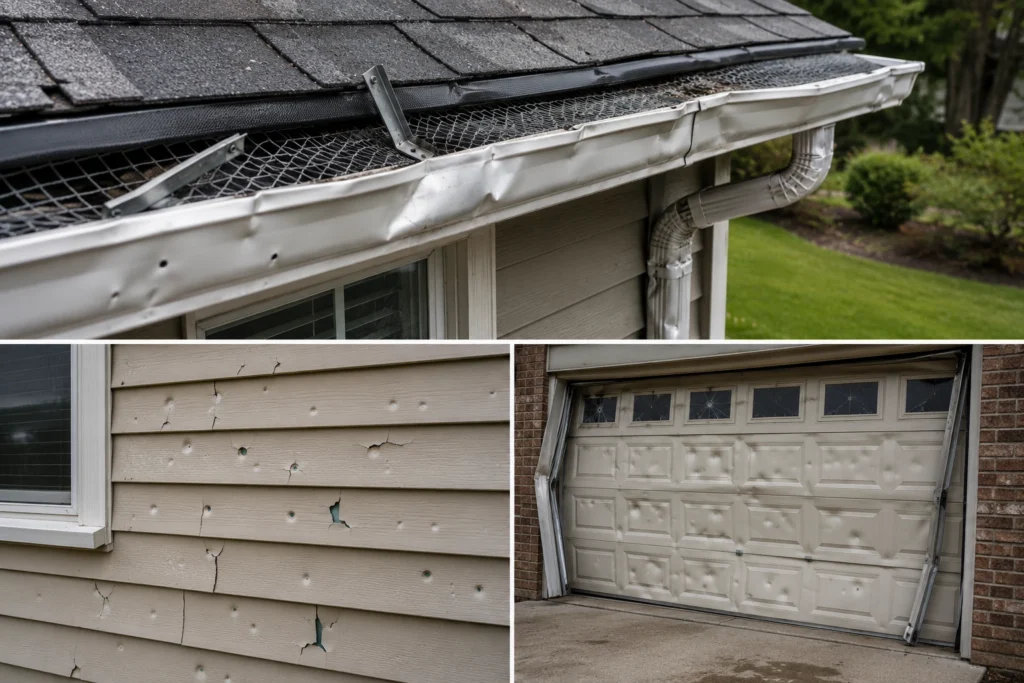
Gutters often receive less attention than the roof itself, yet they are among the first components struck during a hailstorm. Dents, punctures, loosened fasteners, and damaged seams can interfere with proper drainage, increasing the risk of water collecting around the home’s foundation.
A contractor may discover problems such as:
- Cracked gutter joints
- Bent downspouts
- Detached hangers
- Damaged gutter guards
- Improper water flow
- Hidden leaks at seams
If these issues were not included in the original estimate but are directly related to the hail event, they may support a request to reopen the claim.
Siding Damage
Hail impacts can bruise, crack, chip, or puncture siding materials. Vinyl siding may split under larger hailstones, while fiber cement and wood products can sustain fractures that are difficult to identify without close inspection.
Damage commonly includes:
- Surface fractures
- Impact cracks
- Paint damage
- Moisture intrusion points
- Broken trim pieces
- Loose exterior panels
Even cosmetic damage may become more significant if it allows moisture to enter the wall system.
Garage Door Damage
Garage doors are another commonly overlooked area during an initial insurance inspection. Metal doors often display obvious dents, while insulated doors may suffer internal damage that affects their structural integrity.
Inspect for:
- Dents across large panels
- Bent tracks
- Damaged weather stripping
- Window damage
- Malfunctioning rollers
- Alignment issues
When these conditions are documented after the initial adjustment, they may justify additional review.
Can You Reopen a Claim After Accepting a Settlement?
One of the biggest misconceptions surrounding insurance claims is that cashing a settlement check permanently ends the process. That isn’t always true. Many homeowners receive an initial payment before repairs even begin. Once construction starts, additional damage may become apparent, leading to legitimate requests for supplemental compensation.
This is why the answer to can you reopen a hail damage insurance claim often depends less on whether payment has been accepted and more on what documentation exists afterward. However, every situation is unique. Some settlements involve only partial payments intended to begin repairs. Others include language indicating that additional covered damage may still be considered if properly documented. Conversely, certain negotiated settlements include releases that may limit future recovery.
Before assuming the claim cannot be revisited, review:
- Your insurance policy
- Settlement correspondence
- Payment explanations
- Any signed release documents
- Repair contracts
- Contractor inspection reports
Understanding exactly what was agreed upon is the first step toward determining whether reopening remains possible.
Time Limits for Reopening a Hail Damage Claim
Time is one factor homeowners cannot recover once it has passed. Even when additional damage exists, waiting too long may create unnecessary complications.
State Laws
Each state establishes insurance regulations that influence claims handling. These rules may affect reporting deadlines, dispute procedures, and legal rights after a loss. While policies differ, homeowners should never assume they have unlimited time to request another review.
Insurance Policy Deadlines
Insurance policies often contain provisions requiring prompt notice whenever additional damage is discovered. These provisions help insurers investigate while evidence remains available. Waiting several years before reporting newly discovered hail damage may raise questions regarding whether the damage resulted from the original storm or from later weather events.
Statute of Limitations
Separate from policy deadlines, statutes of limitation establish legal deadlines for certain insurance disputes. These deadlines vary depending on jurisdiction and the nature of the claim. Understanding both contractual deadlines and legal deadlines is essential before delaying action.
Why Waiting Can Hurt Your Claim
Time affects more than paperwork. Evidence gradually disappears. Roofs continue aging. Additional storms strike. Repairs become harder to distinguish from original damage. Contractors change. Photographs are misplaced. Witness memories fade. For all these reasons, documenting newly discovered damage immediately provides the strongest foundation for requesting another review.
Signs Your Original Insurance Payment May Have Been Too Low
Receiving payment does not necessarily mean every covered repair was included. Homeowners often discover this during construction rather than during the initial inspection. Several warning signs may indicate the original estimate deserves another look.
Repair Estimates Far Exceed the Settlement
If multiple qualified contractors consistently estimate repairs well above the insurance payment, it’s worth understanding why.
Differences sometimes arise because:
- Additional damage exists
- Material pricing has changed
- Required repairs were omitted
- Certain building components were overlooked
Obtaining detailed written estimates provides valuable comparison points.
Contractor Identifies Additional Damage
Experienced roofing contractors frequently discover hidden conditions after removing damaged materials.
Examples include:
- Rotten decking
- Wet insulation
- Broken flashing
- Damaged ridge vents
- Structural movement
- Underlayment deterioration
Documenting these findings with photographs and written reports significantly strengthens supplemental requests.
Building Code Upgrades
Repairing storm damage doesn’t always mean replacing materials exactly as they existed before.
Local building codes sometimes require upgrades involving:
- Ice barriers
- Improved ventilation
- Fastener spacing
- Flashing installation
- Underlayment requirements
If your policy includes ordinance or law coverage, these additional expenses may qualify for reimbursement.
Matching Material Issues
Imagine replacing only one section of roofing while the remaining shingles have faded over many years. The repaired area may appear dramatically different.
Some policies or state regulations address matching issues affecting:
- Roofing
- Siding
- Gutters
- Exterior paint
- Flooring
These considerations can substantially influence settlement values.
Roofing System Replacement Concerns
Insurance inspections sometimes focus primarily on visible impacts. Contractors, however, evaluate the roof as a complete system.
That broader perspective includes:
- Ridge ventilation
- Starter shingles
- Hip caps
- Flashing assemblies
- Drip edge
- Valleys
- Underlayment
- Fastener integrity
Damage affecting multiple components may justify replacement rather than isolated repairs.
Interior Repairs Increase Costs
Water often travels.
A relatively small roof opening may ultimately require repairs involving:
- Drywall
- Ceiling texture
- Paint
- Flooring
- Electrical fixtures
- Cabinetry
- Insulation
Once these additional repairs are documented, they may become part of the existing claim.
What Evidence Helps Reopen a Hail Damage Insurance Claim?
Strong evidence consistently produces stronger claims. Insurance companies rely on documentation rather than assumptions. The better organized your records are, the easier it becomes to demonstrate why additional review is appropriate.
Professional Roof Inspection
An experienced roofing inspection should include:
- Photographs
- Damage mapping
- Material condition
- Measurements
- Repair recommendations
Detailed reports provide objective support rather than general opinions.
Engineering Reports
Some disputes involve structural concerns beyond normal roofing inspections.
Independent engineering evaluations may address:
- Impact damage
- Structural movement
- Material failure
- Load considerations
- Long-term performance
Although engineering reports aren’t necessary in every claim, they can become valuable in more complex cases.
Drone Photography
Modern drone technology offers exceptional documentation.
High-resolution aerial images can reveal:
- Impact patterns
- Roof slope conditions
- Gutter damage
- Vent damage
- Flashing problems
Drone imagery also creates a permanent visual record for future comparison.
Weather Reports
Reliable weather documentation helps establish:
- Storm dates
- Hail size
- Wind speeds
- Storm tracks
- Local weather conditions
These reports support the connection between observed damage and the reported event.
Contractor Estimates
Detailed contractor estimates should identify:
- Labor costs
- Material quantities
- Code upgrades
- Scope of work
- Waste removal
- Equipment needs
Comprehensive estimates often identify repairs omitted from initial insurance calculations.
Repair Invoices
If emergency repairs were necessary to prevent additional damage, save every invoice.
These records demonstrate:
- When repairs occurred
- Why repairs were needed
- Associated costs
- Contractor observations
Photos and Videos
Visual documentation remains one of the strongest forms of evidence.
Capture:
- Roof damage
- Interior leaks
- Exterior impacts
- Broken materials
- Water stains
- Construction discoveries
Take photographs before, during, and after repairs whenever possible.
Inspection Notes
Maintain a simple timeline documenting:
- Inspection dates
- Contractor visits
- Insurance communications
- Weather events
- Repair discoveries
- Phone conversations
Small details often become valuable months later.
Supplemental Claims vs. Reopened Claims
Although these terms are sometimes used interchangeably, they aren’t always identical.
| Feature | Supplemental Claim | Reopened Claim |
| Purpose | Requests payment for additional covered damage | Requests review of a previously closed claim |
| Timing | Often during active repairs | Usually after the claim has been closed |
| Common Trigger | Hidden damage discovered | Newly identified evidence or overlooked repairs |
| Documentation | Contractor reports, photos, estimates | New inspections, engineering reports, documentation |
| Outcome | Additional payment may be issued | Original claim may be reevaluated |
Regardless of terminology, the goal remains the same: ensuring all covered damage receives fair consideration.
Mistakes That Can Prevent a Claim From Being Reopened
Even valid claims can become harder to support when avoidable mistakes occur.
Common examples include:
- Waiting months before reporting newly discovered damage
- Discarding damaged roofing materials before documentation
- Completing repairs without photographs
- Losing contractor estimates
- Missing insurance deadlines
- Assuming minor damage isn’t worth reporting
- Failing to keep written communication
- Ignoring recurring leaks after storms
One overlooked document or missing photograph may not destroy a claim. However, multiple documentation gaps can significantly weaken the overall presentation. The strongest reopened claims tell a clear, chronological story supported by objective evidence rather than memory alone.
What Happens After You Request to Reopen a Claim?
Submitting a request is only the beginning. Once the insurance company receives your documentation, it typically begins another review of the original file. The exact process varies by insurer, but most reopened hail damage claims follow a similar path. Patience matters here. Some reviews are completed within a few weeks, while more complex losses involving structural damage or multiple expert opinions may take considerably longer.
Insurance Review
The insurer usually starts by examining the existing claim file alongside the newly submitted information.
During this review, they may compare:
- Original inspection reports
- Photographs from the first adjustment
- Contractor estimates
- Repair invoices
- Newly submitted documentation
- Policy provisions
The purpose is to determine whether the additional evidence changes the original scope of damage.
New Inspection
In many cases, the insurance company schedules another inspection. This second visit gives the adjuster an opportunity to evaluate newly reported damage firsthand. Depending on the complexity of the claim, additional specialists such as roofing consultants or engineers may also participate. A second inspection is often beneficial because repairs may have exposed damage that simply wasn’t visible during the first visit.
Additional Documentation Requests
Don’t be surprised if the insurance company asks for more information.
They may request:
- Contractor proposals
- Material invoices
- Engineering evaluations
- Weather reports
- Additional photographs
- Repair timelines
- Maintenance records
Responding promptly helps keep the claim moving forward.
Revised Estimate
If the insurer agrees that additional covered damage exists, a revised estimate may be prepared.
This updated estimate could include:
- Additional roofing materials
- Increased labor costs
- Code-required upgrades
- Interior repairs
- Gutter replacement
- Flashing replacement
- Painting
- Debris removal
The revised estimate becomes the basis for determining whether supplemental payment is owed.
Negotiation Process
Not every reopened claim results in immediate agreement.
Sometimes there are legitimate differences in repair methodology, pricing, or the extent of storm-related damage.
During negotiations, both sides may discuss:
- Repair scope
- Material quantities
- Replacement versus repair
- Applicable policy language
- Building code requirements
Maintaining professional communication and providing organized documentation often leads to more productive discussions.
Final Decision
Once the review is complete, the insurance company generally reaches one of three conclusions:
- Approve additional payment.
- Approve part of the requested supplement.
- Deny the request with an explanation.
Even if the outcome isn’t what you expected, understanding the insurer’s reasoning provides a clearer picture of your available options moving forward.
How a Public Adjuster Can Help Reopen a Hail Damage Insurance Claim
When homeowners ask, can you reopen a hail damage insurance claim, they’re often dealing with more than paperwork. They may already be coordinating contractors, reviewing estimates, responding to insurance requests, and trying to understand policy language at the same time.
That’s where professional assistance can become valuable. A public adjuster works exclusively on behalf of the policyholder rather than the insurance company. Their objective is to evaluate the loss independently, document covered damage, and help present the claim in a thorough and organized manner. For homeowners in Desoto, this can be particularly helpful after widespread hailstorms, when insurance companies may be processing a large number of claims within a short period. Some of the services a Property Damage Adjuster may provide include:
Independent Property Inspection
An independent inspection often looks beyond the obvious damage.
The inspection may include:
- Roofing system evaluation
- Gutters and downspouts
- Siding
- Windows
- Skylights
- Exterior structures
- Interior water damage
- Detached buildings
A comprehensive inspection helps identify areas that may not have been fully addressed during the original adjustment.
Insurance Policy Review
Insurance policies contain much more than coverage limits.
A careful review may examine:
- Deductibles
- Exclusions
- Endorsements
- Conditions
- Duties after loss
- Replacement cost provisions
- Actual cash value calculations
- Ordinance or law coverage
Understanding these provisions helps determine whether additional benefits may be available.
Thorough Damage Documentation
Documentation is often the strongest part of any reopened claim.
A well-prepared file may contain:
- High-resolution photographs
- Damage diagrams
- Contractor reports
- Engineering evaluations
- Weather data
- Cost estimates
- Repair invoices
Organized documentation allows the insurance company to review the claim more efficiently.
Preparing Supplemental Estimates
Accurate estimating requires more than simply assigning prices.
A detailed estimate considers:
- Material quantities
- Labor requirements
- Equipment
- Waste disposal
- Code compliance
- Specialty trades
- Project sequencing
Comprehensive estimates reduce misunderstandings during claim review.
Communication With the Insurance Company
Insurance claims involve ongoing communication.
A public adjuster may assist by:
- Responding to documentation requests
- Scheduling inspections
- Explaining repair scope
- Reviewing revised estimates
- Tracking claim progress
Clear communication often reduces delays throughout the process.
Identifying Overlooked Damage
One of the primary reasons homeowners ask can you reopen a hail damage insurance claim is because additional damage is discovered after the initial settlement.
Examples may include:
- Hidden roof deterioration
- Moisture beneath underlayment
- Flashing damage
- HVAC impacts
- Structural concerns
- Interior staining
- Damaged vents
- Detached gutters
Careful inspections help ensure these issues are documented before repairs are finalized.
Practical Tips for Homeowners Considering a Reopened Claim
If you believe your hail claim may deserve another review, taking a methodical approach can make the process significantly smoother.
Start by organizing every document connected to the original loss.
This includes:
- Insurance correspondence
- Original estimates
- Claim payment summaries
- Contractor proposals
- Inspection reports
- Repair invoices
- Photos taken immediately after the storm
- Emails with adjusters
Next, arrange for a professional inspection if repairs have uncovered additional concerns. Avoid relying solely on verbal conversations. Whenever possible, request written findings that clearly explain why the newly discovered damage relates to the original hail event. It’s also wise to create a simple timeline.
Include important dates such as:
| Event | Date |
| Date of hailstorm | __________ |
| Claim reported | __________ |
| Initial inspection | __________ |
| Settlement received | __________ |
| Repairs began | __________ |
| Additional damage discovered | __________ |
| Request to reopen submitted | __________ |
Having a chronological record allows both you and the insurance company to follow the progression of the claim more easily.
Why Documentation Matters More Than Assumptions
It’s understandable to feel frustrated if unexpected repair costs appear after your claim has already been paid. Still, successful reopened claims are rarely built on frustration alone. They’re built on evidence. Photographs. Inspection reports. Engineering evaluations. Detailed estimates. Repair invoices. Weather documentation.
The stronger the documentation, the easier it becomes to demonstrate why the original estimate should be reviewed again. Instead of approaching the process as a disagreement, think of it as presenting new information that wasn’t previously available. That mindset often leads to more productive conversations.
Final Thoughts
If you’ve been wondering, can you reopen a hail damage insurance claim, the answer is that many homeowners can provided there is legitimate new evidence, additional covered damage, or information that wasn’t available during the original adjustment. Receiving an insurance payment doesn’t automatically mean every aspect of the loss has been fully evaluated. Hidden roof damage, interior leaks, overlooked exterior components, code-required upgrades, and newly discovered structural issues can all affect the true cost of repairs. The key is acting promptly, preserving documentation, and understanding the requirements outlined in your insurance policy.
Taking time to review estimates carefully, compare repair findings, and maintain organized records can make a meaningful difference if additional damage comes to light. Every claim is unique, and the outcome depends on the facts, the available evidence, and the specific policy language governing the loss.
For homeowners in Desoto, where severe hailstorms can leave behind damage that isn’t always obvious at first glance, a careful second look may be worthwhile when repair costs exceed the original settlement or hidden issues emerge during construction. Rather than assuming the opportunity has passed, seek a thorough evaluation of the property and gather the documentation needed to determine whether reopening the claim is appropriate. Ultimately, a well-supported request backed by clear evidence gives everyone involved the best opportunity to reach a fair and informed resolution.
FAQs
Yes, in many cases you can if new covered damage is discovered or additional documentation supports a review of the original claim. The outcome depends on your policy and the insurer’s evaluation.
The deadline varies by insurance policy and state law. Review your policy and report newly discovered damage as soon as possible.
Photos, contractor estimates, inspection reports, engineering evaluations, and repair invoices can all strengthen your request by documenting additional covered damage.
Yes. If damage beneath the shingles or roof decking is discovered during repairs and is related to the original hailstorm, it may support a reopened or supplemental claim.
A reopened claim does not automatically increase your premium. Insurance rates are influenced by many factors, including your insurer’s underwriting practices and regional claim history.
Possibly. If the water damage can be linked to the original hail event and is properly documented, the insurance company may review the claim again.
A supplemental claim seeks payment for additional covered damage discovered during repairs, while a reopened claim asks the insurer to review a previously closed claim based on new information.
Document all damage before making permanent repairs whenever possible. Emergency repairs to prevent further damage are generally appropriate, but keep photos, invoices, and damaged materials if feasible.
A contractor can provide documentation and estimates supporting additional damage, but the homeowner or an authorized representative typically requests the claim review.
If your settlement seems too low, hidden damage is discovered, or your insurer disputes additional repairs, a public adjuster can review the loss and help document the claim.