
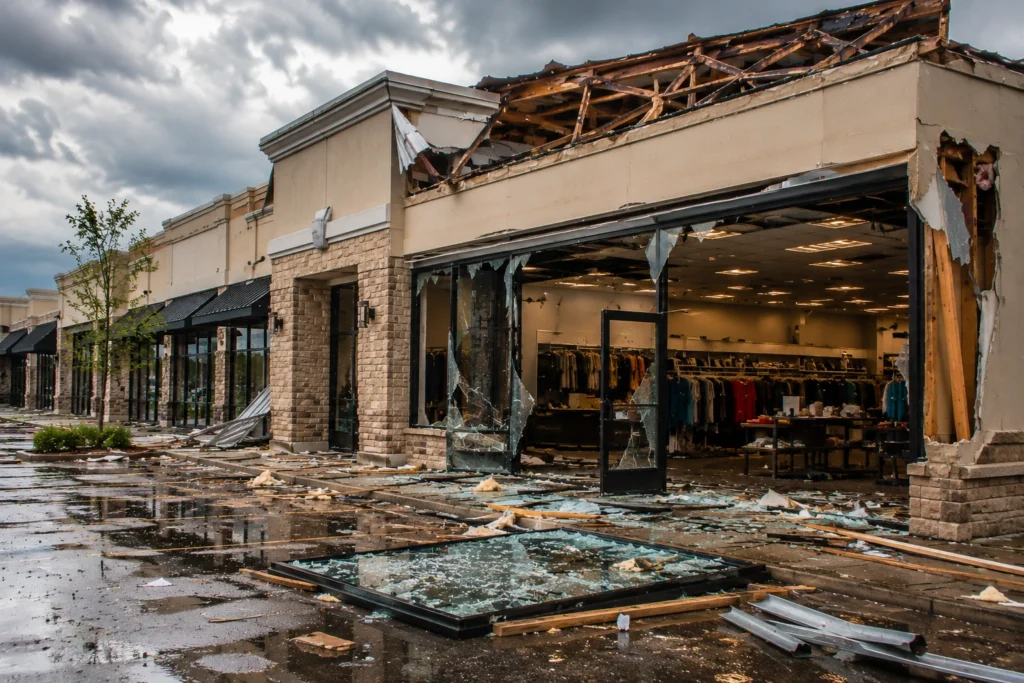
Storms rarely arrive with convenient timing. One afternoon your retail business is serving customers, and by evening you’re staring at broken storefront glass, a leaking roof, soaked inventory, and an uncertain future. Retail Store Storm Damage Claims become more than paperwork at that point they become the path toward getting your business back on its feet. If you own or manage a retail property in Desoto, understanding how commercial insurance claims work before disaster strikes can make every decision after the storm more effective and far less stressful.
Every hour a retail store remains closed affects revenue, employee schedules, customer confidence, and long-term profitability. While insurance is designed to help businesses recover after covered storm damage, the claims process isn’t always straightforward. Documentation requirements, policy exclusions, competing repair estimates, and disagreements over damage values can quickly slow recovery. That’s why preparation matters just as much as the repairs themselves. Storm damage affects far more than a building’s appearance. Water intrusion can quietly destroy inventory, electrical systems may require extensive testing before reopening, and structural concerns often remain hidden until cleanup begins. The faster you recognize these issues, the better positioned you’ll be to pursue a complete insurance claim rather than discovering expensive problems weeks later.
Commercial property claims often involve multiple moving parts. Contractors, restoration companies, insurance adjusters, engineers, accountants, and business owners all play different roles throughout the recovery process. Understanding how these professionals contribute helps create a smoother claim and reduces the likelihood of overlooked damage. Some owners even research technical topics such as forensic engineering to better understand how experts determine the causes and extent of structural failures after severe storms. Preparation doesn’t eliminate storm damage, but it dramatically improves your ability to respond. From documenting losses to protecting remaining inventory, every decision made in the first few days influences the outcome of the claim. Business owners who stay organized generally experience fewer delays and stronger settlement support than those scrambling to collect information weeks later.
Retail properties also face challenges that residential buildings simply don’t. Large storefront windows, extensive signage, rooftop HVAC equipment, electronic payment systems, and valuable merchandise create numerous opportunities for storm-related losses. Each damaged component may require separate documentation, repair estimates, and policy evaluation before the insurance company finalizes payment. Many business owners also search for related insurance questions after severe weather, including Can You Reopen a Hail Damage Insurance Claim if additional damage is discovered after the initial settlement. While every situation depends on policy language and claim history, identifying hidden damage early remains one of the most effective ways to avoid needing additional claim reviews later. Throughout this guide, we’ll examine every stage of Retail Store Storm Damage Claims, explain what commercial insurance may cover, identify common mistakes that reduce settlements, and provide practical steps that can help retail businesses recover with greater confidence after severe weather.
Understanding Retail Store Storm Damage Claims
Storms can damage commercial properties in countless ways. Some losses are immediately obvious, while others remain hidden until restoration work begins. Understanding what qualifies as storm damage is the first step toward building a successful insurance claim. Unlike routine maintenance issues, storm damage generally results from sudden weather events. Strong winds, hail, lightning, heavy rainfall, tornadoes, and flying debris can all cause significant physical damage to retail buildings. The insurance policy ultimately determines what is covered, but documenting every affected area remains essential regardless of the storm’s severity.
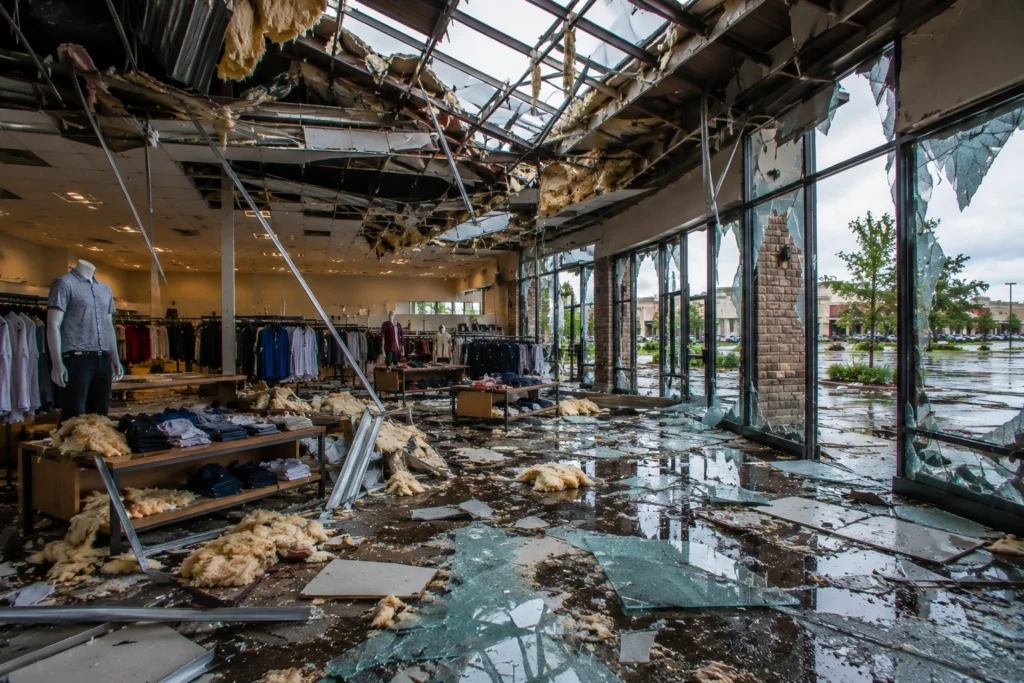
A single event may affect multiple parts of the business at once. For example, hail can damage the roof while wind shatters storefront windows. Rainwater may then enter through those openings, damaging flooring, shelving, merchandise, and electrical equipment. What begins as one weather event often develops into several interconnected losses. Retail stores also depend heavily on uninterrupted operations. Customers expect safe shopping environments, functional checkout systems, comfortable temperatures, and fully stocked shelves. Storm damage threatens each of these business essentials.
What Qualifies as Storm Damage?
Although every insurance policy contains unique language, retail storm claims frequently involve damage caused by:
- High winds
- Hail impacts
- Tornadoes
- Severe thunderstorms
- Lightning strikes
- Wind-driven rain
- Falling trees
- Flying debris
- Roof failures
- Exterior structural damage
Secondary damage often becomes even more expensive than the initial impact. A relatively small roof opening may allow thousands of gallons of water into the building during prolonged rainfall, resulting in widespread interior damage. Timing also matters. Acting quickly to protect the property from additional damage demonstrates reasonable mitigation efforts, which many insurance policies require after a covered loss.
How Storm Damage Impacts Retail Businesses
The financial consequences extend well beyond replacing damaged building materials. Retail stores rely on continuous operations. Every day spent closed represents lost opportunities that cannot always be recovered later. Storm damage commonly affects several critical business areas simultaneously.
| Business Area | Potential Impact |
| Building | Roof leaks, broken windows, structural damage |
| Inventory | Water damage, contamination, spoilage |
| Technology | POS system failures, network outages |
| Security | Damaged alarms and surveillance systems |
| Customer Experience | Store closures and reduced foot traffic |
| Employees | Schedule disruptions and reduced productivity |
Even relatively minor physical damage can create major operational problems. Imagine a clothing retailer where only one section of the roof leaks. Water damages inventory displays, forces customers away from part of the showroom, interrupts lighting, and creates slip hazards. Repairing the roof alone doesn’t restore the lost sales experienced during closure. This is why commercial storm claims often involve much more than construction costs.
Common Types of Storm Damage in Retail Stores
Every retail property presents different vulnerabilities depending on its size, age, construction materials, and location. Nevertheless, certain categories of storm damage appear repeatedly after severe weather events. Recognizing these issues early allows business owners to document them before cleanup begins.
Roof Damage
Commercial roofing systems absorb the full force of severe weather. Wind can lift roofing membranes, tear flashing loose, and expose underlying materials. Hail may puncture roofing surfaces or weaken protective coatings that eventually allow water infiltration.
Common roof problems include:
- Missing roofing materials
- Torn membranes
- Damaged flashing
- Cracked skylights
- Roof punctures
- Standing water
- Damaged roof drains
- HVAC curb damage
Some roof damage remains invisible from ground level. Professional inspections often reveal punctures or compromised seams that continue leaking long after the storm has passed.
Exterior Damage
The outside of a retail store creates the customer’s first impression. Unfortunately, it also absorbs much of the storm’s force.
Strong winds and hail frequently damage:
- Storefront glass
- Automatic entry doors
- Exterior lighting
- Building signs
- Metal panels
- Stucco
- Brick veneer
- Decorative architectural features
- Awnings
- Gutters and downspouts
Broken storefront windows create additional risks beyond repair costs. Rainwater enters the building more easily, merchandise becomes exposed, and security concerns increase until temporary protection is installed.
Interior Water Damage
Water intrusion often creates the largest portion of commercial insurance losses. Leaks rarely remain confined to one location. Water travels along framing members, insulation, wiring, and ceiling assemblies before finally becoming visible.
Affected interior components may include:
- Ceiling tiles
- Drywall
- Paint finishes
- Flooring
- Display fixtures
- Checkout counters
- Product shelving
- Storage rooms
- Office spaces
- Break rooms
Moisture trapped behind walls or above ceilings may eventually support mold growth if drying begins too late. Professional moisture mapping frequently identifies hidden wet areas that visual inspections miss.
Electrical and Equipment Damage
Modern retail businesses depend on technology. Even brief electrical disruptions can interrupt sales, damage equipment, and delay reopening.
Storm-related electrical losses may involve:
- Electrical panels
- Wiring
- Emergency lighting
- Security cameras
- Alarm systems
- Point-of-sale terminals
- Refrigeration equipment
- Network hardware
- Servers
- Digital signage
Lightning strikes deserve particular attention because damage isn’t always immediately visible. Sensitive electronic components may continue operating temporarily before failing days or weeks later. Maintaining inspection records for damaged electrical systems strengthens supporting documentation during the insurance claim.
Inventory Loss
Inventory often represents one of a retailer’s largest financial investments. Water, humidity, roof leaks, broken glass, and contamination may render products unsellable even if they appear only slightly damaged.
Common inventory losses include:
- Water-soaked merchandise
- Torn packaging
- Mold contamination
- Damaged electronics
- Wet textiles
- Cosmetic damage
- Food spoilage
- Chemical contamination
Documentation becomes especially important here. Instead of immediately disposing of damaged products, photograph everything thoroughly from multiple angles. Create organized inventory lists showing product descriptions, quantities, estimated values, and purchase records whenever available.
Many insurers require substantial documentation before approving large inventory reimbursements. The more complete those records become, the easier it is to demonstrate the true scope of the financial loss.
What Commercial Insurance May Cover
One of the biggest misconceptions surrounding Retail Store Storm Damage Claims is that every storm-related expense is automatically covered. In reality, commercial insurance policies vary significantly, and coverage depends on the policy language, endorsements, deductibles, exclusions, and the specific cause of the damage.
Understanding the major categories of coverage before a storm occurs helps business owners know what documentation to gather and what questions to ask during the claims process. Commercial property insurance is designed to help businesses recover from covered losses, but the scope of protection differs from one policy to another. Reading the declarations page alone isn’t enough. Owners should understand exactly what each coverage section provides before a storm ever appears on the radar.
Building Coverage
Building coverage generally protects the physical structure of the retail store when it suffers damage from a covered storm event.
This may include repairs or replacement involving:
- Roofing systems
- Exterior walls
- Foundations (when covered)
- Storefront glass
- Doors
- Windows
- Permanent flooring
- Built-in fixtures
- Plumbing systems
- Electrical systems
If multiple parts of the structure are damaged during one storm, each affected area should be documented separately rather than grouped into a single estimate.
Business Personal Property Coverage
Retail stores contain much more than walls and ceilings. Business personal property coverage may help pay for items owned by the business that are damaged by a covered event.
Examples include:
- Office furniture
- Display shelving
- Cash registers
- Point-of-sale systems
- Computers
- Office equipment
- Store fixtures
- Decorative displays
- Break room equipment
- Maintenance tools
Creating a detailed inventory before disaster strikes makes proving ownership significantly easier during a claim.
Inventory Coverage
For many retailers, inventory represents the largest financial asset inside the building.
Storms can damage merchandise through:
- Water exposure
- Broken glass
- Roof leaks
- High humidity
- Wind-blown debris
- Power outages affecting refrigerated goods
Businesses should photograph damaged products before disposal whenever health and safety regulations permit. Include wide-angle photographs along with close-up images that clearly show product labels and damage. Invoices, purchase orders, and inventory management reports provide valuable supporting documentation.
Equipment Coverage
Retail operations rely heavily on specialized equipment. Depending on the policy, covered losses may involve:
- Refrigeration systems
- Walk-in coolers
- Commercial freezers
- HVAC units
- Digital menu boards
- Checkout equipment
- Barcode scanners
- Security systems
- Surveillance cameras
Even equipment that appears functional should be inspected after a major storm. Internal damage isn’t always visible immediately.
Business Interruption Coverage
Sometimes the largest loss isn’t physical damage. It’s lost time. Business interruption coverage may help replace lost income while the store remains closed because of covered storm damage.
Potential covered expenses may include:
- Lost revenue
- Continuing payroll
- Rent or mortgage payments
- Utility expenses
- Property taxes
- Loan obligations
- Certain operating expenses
Calculating these losses requires financial documentation rather than construction estimates. Profit-and-loss statements, sales reports, payroll records, and tax filings often become essential parts of the claim.
Extra Expense Coverage
Some businesses can reduce long-term losses by reopening quickly from a temporary location. Extra expense coverage may help pay for reasonable costs incurred to continue operating after a covered loss.
Examples include:
- Temporary retail space
- Equipment rentals
- Temporary signage
- Expedited shipping
- Emergency cleanup
- Generator rentals
- Temporary office equipment
While these expenses increase short-term spending, they may reduce overall business interruption losses.
What Is Often Not Covered
Commercial insurance provides valuable protection, but no policy covers every situation. Understanding common exclusions helps prevent unpleasant surprises after a storm.
Coverage limitations frequently involve:
- Flood damage under standard commercial property policies
- Normal aging
- Deferred maintenance
- Gradual deterioration
- Rust
- Corrosion
- Insect damage
- Mechanical breakdown
- Pre-existing damage
Mold coverage also varies considerably. Some policies provide limited mold protection only when mold results directly from a covered loss and prompt mitigation efforts occurred. Others impose strict dollar limitations regardless of the total repair cost.
Deductibles also deserve attention. Commercial storm deductibles may differ from standard deductibles, especially for wind and hail events. Large commercial policies sometimes calculate deductibles as a percentage of the building’s insured value rather than a fixed dollar amount. Understanding these details before filing a claim helps set realistic expectations.
Immediate Steps After Storm Damage
The hours following a storm often determine how smoothly the insurance claim progresses. A calm, organized response protects both the property and the business’s financial interests.
Prioritize Safety
Nothing matters more than protecting people. Before entering the building, evaluate potential hazards such as:
- Downed electrical lines
- Broken glass
- Structural instability
- Gas leaks
- Standing water near electrical equipment
- Fallen trees
- Damaged ceilings
If emergency responders restrict access, wait until the property is declared safe.
Prevent Additional Damage
Insurance policies generally expect policyholders to take reasonable steps to minimize further damage after a covered loss. Temporary mitigation may include:
- Installing roof tarps
- Boarding broken windows
- Removing standing water
- Covering merchandise
- Relocating inventory
- Drying affected areas
- Securing entrances
Keep every invoice related to emergency mitigation. These expenses may become part of the insurance claim.
Document Everything
Documentation often becomes the strongest evidence supporting Retail Store Storm Damage Claims. Don’t rely on memory. Create a complete visual record before major cleanup begins.
Photograph:
- Roof damage
- Exterior walls
- Storefront windows
- Parking lots
- Signage
- Interior ceilings
- Wet flooring
- Inventory
- Mechanical equipment
- Electrical panels
- Office spaces
- Storage rooms
Video walkthroughs provide additional context that still photographs sometimes miss. If safe access exists, drone photography may capture roof damage that cannot be viewed from ground level. Organization matters just as much as documentation itself.
Consider maintaining folders such as:
| Documentation Type | Examples |
| Photos | Roof, interior, inventory |
| Videos | Complete walkthroughs |
| Financial Records | Sales reports, invoices |
| Inventory Lists | Damaged merchandise |
| Repair Estimates | Contractors and engineers |
| Emergency Costs | Tarps, cleanup, rentals |
Well-organized records often simplify later discussions with insurance representatives.
Notify the Insurance Company
Contact your insurer as soon as practical after discovering storm damage. Provide factual information. Avoid estimating repair costs before inspections occur.
Record important details during every conversation, including:
- Claim number
- Representative’s name
- Date
- Time
- Summary of discussion
Maintaining a written communication log helps resolve misunderstandings later.
Save Every Receipt
Small expenses accumulate quickly after severe weather.
Keep documentation for:
- Emergency cleanup
- Temporary repairs
- Security services
- Equipment rentals
- Hotel accommodations (if necessary)
- Temporary office supplies
- Fuel
- Generator rentals
Even relatively minor purchases may become reimbursable depending on policy language.
How the Commercial Claims Process Works
Many business owners file very few insurance claims during their careers. Understanding the overall process removes much of the uncertainty.
Step 1: File the Claim
The process begins by notifying the insurance company about the loss.
You’ll typically provide:
- Date of loss
- Storm description
- Property address
- Initial damage observations
- Emergency mitigation performed
The insurer then assigns a claim number and begins its investigation.
Step 2: Insurance Inspection
An adjuster usually schedules an inspection to evaluate reported damage.
During the inspection they may examine:
- Roofing systems
- Exterior elevations
- Windows
- Interior finishes
- Mechanical systems
- Inventory
- Equipment
- Site conditions
Owners should accompany inspections whenever possible. Questions can be answered immediately, and additional damage may be pointed out before the inspection concludes.
Step 3: Damage Documentation
Commercial claims frequently involve several independent evaluations.
These may include:
- Roofing contractors
- Restoration companies
- Engineers
- Electricians
- HVAC specialists
- Inventory professionals
Each inspection adds supporting information that helps establish the full scope of repairs.
Step 4: Repair Estimates
Multiple repair estimates often produce different pricing. This doesn’t automatically indicate that one contractor is incorrect.
Variations may result from:
- Material specifications
- Labor assumptions
- Hidden damage
- Local code requirements
- Equipment access
- Project scheduling
Comparing estimates line by line often reveals important differences.
Step 5: Coverage Review
After reviewing inspection reports, photographs, estimates, and policy language, the insurer evaluates which damages fall within covered policy provisions. Some items may receive immediate approval. Others may require additional documentation or expert opinions. Coverage discussions sometimes continue even after repair work begins.
Step 6: Settlement Negotiation
Commercial claims frequently involve negotiation.
Differences may arise regarding:
- Scope of repairs
- Material pricing
- Equipment replacement
- Depreciation
- Business interruption calculations
- Code upgrades
Supporting documentation becomes especially valuable during this phase. Detailed reports generally carry more weight than assumptions or verbal descriptions.
Step 7: Claim Payment
Once coverage decisions are finalized, payment is typically issued according to the policy terms.
Some commercial claims involve:
- Initial payments
- Supplemental payments
- Recoverable depreciation
- Additional payments after repairs
Large losses may continue evolving as repairs uncover hidden damage. Maintaining organized documentation throughout construction helps support supplemental claim requests if previously concealed storm-related damage is discovered.
Why Retail Store Claims Become Complicated
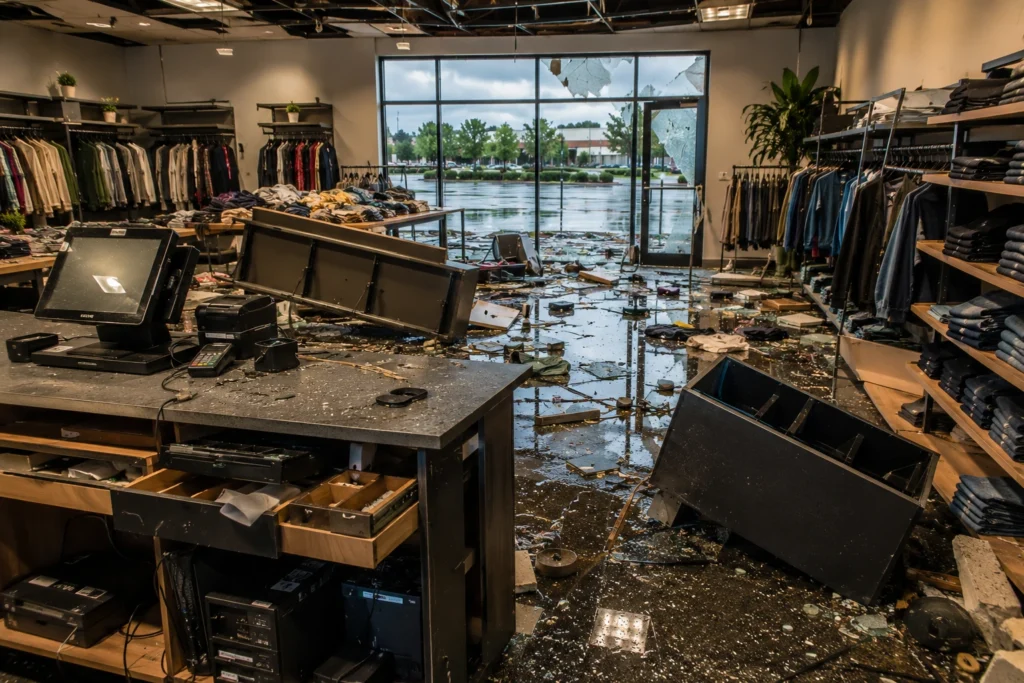
Commercial insurance claims are rarely simple. Unlike many residential claims, retail businesses involve buildings, inventory, technology, employees, vendors, and ongoing operations all affected simultaneously by a single storm. Hidden damage creates one of the biggest challenges. A roof may appear repairable after the initial inspection, only for contractors to discover saturated insulation, deteriorated decking, or damaged structural components once work begins.
Inventory valuation introduces another layer of complexity. Insurance companies may evaluate replacement cost differently from retail selling price, while seasonal merchandise, discontinued products, and promotional inventory often require additional documentation to establish value. Business interruption calculations can become equally challenging. Determining how much income a business would have earned if the storm had never occurred often requires careful analysis of historical sales, seasonal trends, and operating expenses.
Lease agreements may also influence the claim. In shopping centers, responsibility for roofs, exterior walls, storefronts, or interior improvements may be divided between landlords and tenants. Understanding those obligations early helps prevent delays and duplicate claim efforts. Finally, local building codes can increase repair costs beyond what is initially visible. If damaged systems must be upgraded to meet current code requirements during restoration, additional documentation may be necessary to determine whether those costs are covered under the policy
Business Interruption Losses Many Owners Overlook
Physical repairs usually receive the most attention after a storm. Yet for many retailers, the biggest financial hit comes from the revenue that never reaches the cash register. A damaged roof can often be repaired. Lost customer traffic during a month-long closure is much harder to recover. Business interruption losses extend beyond missed sales. They can affect nearly every aspect of day-to-day operations, especially when repairs take weeks or months.
Common financial losses include:
- Lost sales revenue
- Reduced gross profits
- Employee payroll
- Rent or mortgage payments
- Utility bills
- Loan payments
- Marketing and advertising expenses
- Temporary relocation costs
- Additional delivery expenses
- Lost online fulfillment capabilities
- Vendor penalties
- Contractual obligations
Imagine a boutique clothing store forced to close during the holiday shopping season. Even if the building is fully restored by January, those seasonal sales opportunities may never return. That’s why accurate financial documentation is just as important as documenting physical damage.
Keep organized records such as:
| Financial Record | Why It Matters |
| Profit and loss statements | Demonstrates historical earnings |
| Sales reports | Shows normal revenue patterns |
| Payroll records | Supports ongoing labor expenses |
| Tax returns | Verifies business income |
| Vendor invoices | Documents continuing obligations |
| Bank statements | Supports financial history |
The stronger the financial documentation, the easier it becomes to support business interruption calculations during the insurance claim.
Mistakes That Can Reduce Your Insurance Settlement
Even legitimate claims can result in lower settlements if avoidable mistakes occur during the recovery process. Fortunately, most of these issues can be prevented with careful planning and thorough documentation.
Waiting Too Long
Storm damage should be reported promptly. Delays can make it more difficult to distinguish storm-related damage from deterioration that occurred afterward.
Incomplete Documentation
A few cell phone photographs rarely tell the complete story.
Instead, document:
- Every damaged room
- Every affected exterior elevation
- Every damaged product
- Equipment
- Roofing
- Parking areas
- Mechanical systems
The goal is to leave very little open to interpretation.
Throwing Away Damaged Inventory
Business owners often begin cleanup immediately to reopen faster. While understandable, disposing of damaged inventory before proper documentation may complicate portions of the claim. Photograph, count, categorize, and document products before disposal whenever practical.
Accepting the First Estimate Without Review
Insurance estimates are important, but they may not always capture every repair item. Compare estimates carefully.
Questions to consider include:
- Are all damaged areas included?
- Were hidden damages considered?
- Are current material costs reflected?
- Does the estimate include code-required upgrades?
- Were cleanup costs included?
- Does it account for debris removal?
Careful review can reveal overlooked items that deserve additional attention.
Ignoring Hidden Damage
Some storm damage remains invisible for weeks.
Examples include:
- Wet insulation
- Slow roof leaks
- Moisture behind walls
- Electrical corrosion
- Mold growth
- Structural movement
Professional inspections often identify these issues before they become much larger repair projects.
Making Permanent Repairs Too Soon
Emergency mitigation protects the property. Permanent reconstruction should generally wait until sufficient documentation has been completed and the insurer has had an opportunity to inspect the damage, unless immediate repairs are necessary to protect health and safety.
How a Public Adjuster Can Help Retail Businesses
Commercial insurance claims often involve far more documentation than many business owners expect. A public adjuster represents the policyholder rather than the insurance company and can assist throughout the claims process.
Depending on the situation, a public adjuster may help with:
- Reviewing insurance policies
- Documenting storm damage
- Preparing detailed estimates
- Organizing claim documentation
- Valuing damaged inventory
- Calculating business interruption losses
- Coordinating inspections
- Negotiating claim settlements
- Managing supplemental claims if additional covered damage is discovered
This can be especially valuable for larger retail losses involving multiple contractors, extensive inventory, or prolonged business closures. The objective isn’t simply to increase paperwork. It’s to present a complete, well-supported claim that accurately reflects the covered damage sustained by the business.
Storm Preparedness Tips for Retail Store Owners
The best insurance claim begins long before the storm arrives. Preparation saves valuable time when every hour matters. Consider creating an annual storm readiness checklist.
Storm Preparedness Checklist
✓ Review your commercial insurance policy annually.
✓ Photograph the building inside and out.
✓ Update inventory records regularly.
✓ Back up financial records to secure cloud storage.
✓ Inspect the roof each year.
✓ Clean roof drains and gutters.
✓ Trim nearby trees.
✓ Test backup generators.
✓ Maintain emergency contractor contact information.
✓ Train employees on emergency response procedures.
✓ Keep important insurance documents in multiple secure locations.
Businesses that prepare ahead of time often recover more efficiently because critical information is already organized before the emergency begins.
Special Considerations for Retail Businesses in Texas
Texas weather has a reputation for changing quickly, and retail properties are frequently exposed to severe thunderstorms, damaging hail, strong straight-line winds, heavy rainfall, and occasional tornadoes. For retail owners in Desoto, these weather events can interrupt operations with little warning. A single storm may damage roofing systems, signage, storefront glass, HVAC equipment, and valuable inventory all at once.
Because severe weather can affect entire commercial districts simultaneously, contractors and restoration companies often become extremely busy after major storms. Scheduling inspections, emergency repairs, and mitigation services early may help reduce additional property damage while protecting valuable claim documentation. Understanding local weather risks also encourages proactive maintenance. Regular roof inspections, drainage improvements, and emergency planning can reduce future losses and support a faster recovery after a covered event.
Frequently Overlooked Damage After Storms
Not every problem is immediately visible. Some of the most expensive repairs begin as damage hidden behind walls, above ceilings, or beneath roofing materials.
Areas frequently overlooked include:
- Wet insulation
- Damaged roof decking
- Ceiling cavities
- Hidden mold growth
- HVAC ductwork
- Electrical wiring
- Water trapped beneath flooring
- Foundation moisture intrusion
- Exterior sealant failures
Comprehensive inspections can identify these conditions before they develop into much larger restoration projects.
When Should You Hire a Public Adjuster?
Every claim is different. Some smaller losses move smoothly through the insurance process, while larger commercial claims may require considerably more coordination.
Business owners often consider hiring a public adjuster when:
- The damage is extensive.
- The insurance settlement appears lower than expected.
- The claim has been delayed.
- The claim has been partially denied.
- Business interruption losses are significant.
- Multiple buildings are involved.
- Large amounts of inventory were damaged.
- Complex documentation is required.
Seeking professional assistance early can help organize information before important evidence disappears during cleanup and reconstruction.
Final Thoughts
Recovering from a severe storm isn’t simply about repairing a roof or replacing broken windows. It’s about restoring an entire business operation, protecting employees, serving customers again, and minimizing long-term financial disruption. Throughout the Retail Store Storm Damage Claims process, preparation remains one of the most valuable tools a business owner can have. Thorough documentation, organized financial records, timely reporting, and careful review of repair estimates all contribute to a stronger and more efficient claim.
It’s also important to remember that every commercial insurance policy is unique. Understanding your coverage before disaster strikes and asking questions whenever policy language is unclear can prevent unnecessary surprises during the recovery process. If hidden damage is discovered after repairs begin, continue documenting everything and communicate promptly with the insurance company. Additional inspections and supplemental claim information may be necessary depending on the circumstances.
For retail businesses in Desoto, severe weather is an ongoing risk that cannot be eliminated, but its financial impact can often be reduced through preparation, prompt action, and informed decision-making. Whether your store experiences wind damage, hail, heavy rain, or another covered storm event, taking a methodical approach to Retail Store Storm Damage Claims can help position your business for a smoother recovery and a stronger path forward.
FAQs
Retail Store Storm Damage Claims are insurance claims filed by retail businesses seeking compensation for covered damage caused by storms such as hail, wind, lightning, or heavy rain.
Coverage often includes damage to the building, inventory, equipment, and, depending on the policy, business interruption losses caused by covered storm events.
Report the damage as soon as possible after ensuring the property is safe. Prompt reporting helps avoid delays and preserves important evidence.
Yes. Take photos and videos of all damage before beginning permanent repairs, while making temporary repairs only to prevent further loss.
Many commercial policies include business interruption coverage, which may reimburse lost income and certain ongoing expenses while your store is closed due to a covered loss.
In many cases, additional covered damage discovered during repairs can be reported, but requirements vary by policy and insurer.
Review the estimate carefully and compare it with independent contractor assessments. You may request a supplemental review or seek professional claim assistance.
It may be, provided the damage resulted from a covered event and you can document the inventory and its value.
Consider hiring a public adjuster if your claim is large, delayed, denied, underpaid, or involves complex damage and business interruption losses.
Maintain updated inventory records, inspect the property regularly, back up important documents, and review your insurance coverage annually.