
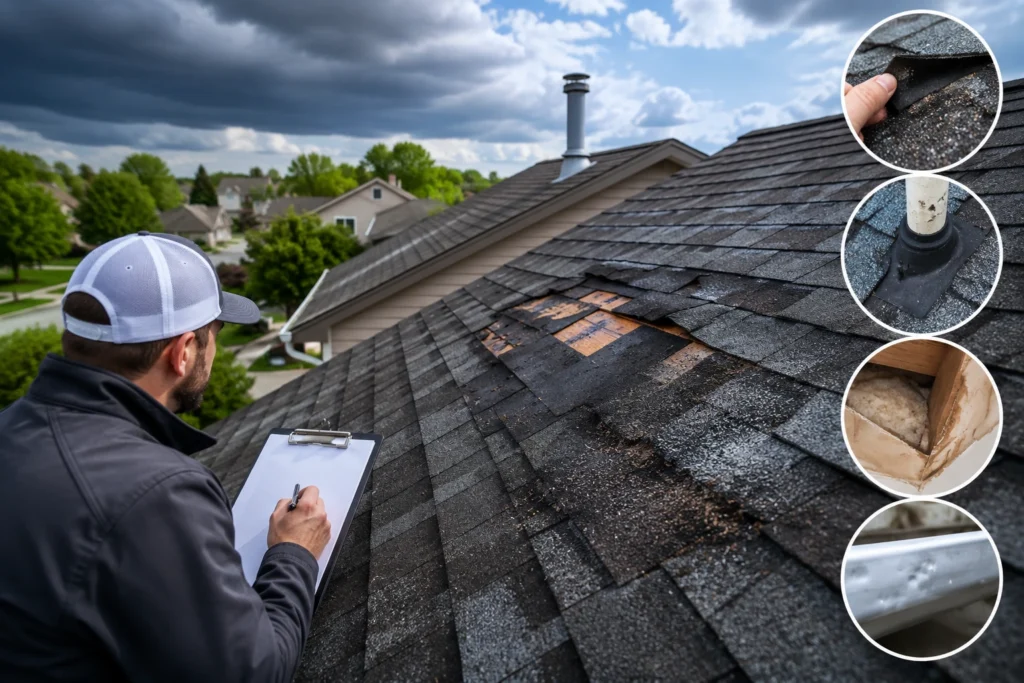
Roof damage is rarely as simple as a few missing shingles. In fact, what insurance adjusters miss on roof claims can become the difference between a settlement that fully restores a home and one that leaves a homeowner paying thousands of dollars out of pocket. Every storm tells a different story, and every roof responds differently depending on its age, materials, installation quality, and maintenance history. If you own a home in Desoto, understanding where inspections can fall short is one of the smartest steps you can take before accepting an insurance settlement.
Most homeowners assume an insurance inspection is exhaustive. After all, an adjuster arrives with measuring tools, a camera, and years of experience. Yet no inspection is perfect. Time constraints, safety concerns, weather conditions, and even the complexity of modern roofing systems can cause important damage to be overlooked. Missing damage does not automatically mean negligence it often reflects the practical limitations of evaluating a property within a limited timeframe.
Roof claims have become increasingly complex as roofing materials and construction methods have evolved. Today’s roofing systems are made up of numerous interconnected components that work together to keep moisture out while allowing proper ventilation. Damage to one element can affect the performance of several others, making a careful inspection essential for identifying the full scope of a loss.
Interestingly, evaluating physical evidence follows principles similar to forensic reconstruction, where investigators piece together multiple forms of evidence to understand how an event occurred. Likewise, roof inspections often require connecting seemingly minor signs of damage into a complete picture rather than relying on one obvious indicator.
The purpose of this guide is not to criticize insurance professionals. Most adjusters work diligently under demanding schedules while handling numerous claims after major storms. Instead, this article explains the areas where damage is commonly overlooked, why those oversights happen, and how homeowners can better protect their interests throughout the claims process.
Understanding the Role of an Insurance Adjuster
One of the biggest misunderstandings during a roof claim involves who each adjuster represents. Although everyone involved wants the claim to move efficiently, their responsibilities differ significantly. There are generally three types of adjusters involved in property claims.
| Type | Represents | Primary Objective |
| Staff Adjuster | Insurance Company | Evaluate losses according to company guidelines |
| Independent Adjuster | Insurance Company | Handle claims on behalf of insurers during high claim volume |
| Public Adjuster | Policyholder | Document damages and negotiate based on policy benefits |
Understanding these distinctions helps homeowners set realistic expectations throughout the claims process. An insurance company adjuster’s job is to inspect the reported damage, determine what is covered under the policy, prepare an estimate, and recommend payment based on the policy language. While many inspections are thorough, they often occur under strict scheduling demands, especially after widespread hailstorms or severe wind events.
That workload matters. After a major weather event, an adjuster may inspect several roofs in a single day. Each property deserves careful attention, but practical time limitations can make it difficult to investigate every potential issue in depth. This helps explain why what insurance adjusters miss on roof claims often involves subtle forms of damage rather than obvious structural failures.
How Roof Inspections Usually Work
A standard roof inspection generally follows a predictable sequence. First, the homeowner reports the loss to the insurance company. The insurer reviews the policy, assigns an adjuster, and schedules an inspection. During the site visit, the adjuster photographs the roof, measures affected areas, documents visible damage, and prepares an estimate outlining recommended repairs or replacement.
On paper, the process appears straightforward. In practice, however, roof inspections are influenced by several variables. Steep roof pitches can limit safe access. Wet shingles create slip hazards. Mature trees may block portions of the roof from view. Solar panels, satellite dishes, skylights, or previous repairs can hide damaged areas that require additional investigation.
Even under ideal weather conditions, an adjuster evaluates hundreds of roofing components during a relatively short appointment. Because roofing systems are complex, some conditions simply require more time than a standard inspection allows. That is one of the primary reasons homeowners should understand what insurance adjusters miss on roof claims before making decisions about repairs or settlements.
Why Roof Damage Is Frequently Missed
Many homeowners immediately assume overlooked damage results from carelessness. In reality, the explanation is often much simpler. Roof inspections involve balancing safety, efficiency, weather conditions, and available evidence. Several factors commonly contribute to missed damage.
Limited Inspection Time
Large storms generate enormous numbers of insurance claims. Adjusters may travel from neighborhood to neighborhood completing inspections throughout the day. Even experienced professionals face practical scheduling limitations. As a result, inspections often prioritize readily observable damage before moving on to the next appointment. Minor indicators of larger problems can sometimes receive less attention than they deserve.
Hidden Damage Isn’t Always Visible
One of roofing’s greatest challenges is that visible damage represents only a portion of the actual loss.
For example:
- Water can travel several feet before appearing inside a home.
- Lifted shingles may settle back into place after high winds.
- Torn underlayment remains hidden beneath intact roofing materials.
- Moisture may weaken roof decking without creating immediate interior stains.
These issues frequently remain concealed until additional testing or partial removal of roofing materials takes place. That’s why experienced roofing professionals often recommend evaluating more than just what appears on the surface.
Safety Limitations Affect Every Inspection
Safety always comes first. No inspection is worth risking serious injury. Certain conditions make complete roof access difficult or impossible.
These include:
- Wet roofing surfaces
- Steep roof slopes
- Loose roofing materials
- Structural instability
- Ice accumulation
- High winds
- Fragile or deteriorated roofing products
When direct access is unsafe, inspections may rely on binoculars, drone photography, or observations from accessible sections of the roof. Although these methods provide valuable information, they may not reveal every concealed problem.
Common Types of Roof Damage That Are Often Missed
Storm damage is not always dramatic. Some of the costliest repairs begin with damage that appears almost insignificant. Recognizing these subtle warning signs helps homeowners better understand the condition of their roofing system.
Granule Loss
Asphalt shingles contain protective mineral granules that shield the underlying asphalt from ultraviolet light and weather exposure. Following hailstorms or years of environmental wear, these granules may gradually become dislodged. At first glance, scattered granule loss may appear cosmetic.
In reality, exposed asphalt ages much faster. Without its protective coating, shingles become increasingly vulnerable to cracking, drying, and premature deterioration. Large areas of granule loss can significantly reduce the expected service life of a roof even when leaks have not yet developed.
Bruised Asphalt Shingles
Hail impacts often leave bruises that are nearly impossible to identify from ground level. In many cases, inspectors gently press suspected impact areas with their fingers. A damaged section frequently feels softer than surrounding material because the asphalt beneath the surface has fractured.
These internal fractures weaken the shingle while leaving little visible evidence. Months later, temperature changes and normal weather exposure may cause those weakened areas to crack completely. Bruised shingles represent one of the clearest examples of hidden storm damage.
Lifted or Creased Shingles
Strong winds affect roofs differently than hail. Instead of striking directly, wind lifts shingles upward. When this happens, the reinforcing asphalt layer may crease along the fold line. Once the wind subsides, the shingle often settles back into place.
From the ground, everything appears normal. The problem is that the adhesive seal may already be broken. Without that seal, future storms can remove shingles much more easily. This subtle condition illustrates another example of what insurance adjusters miss on roof claims, especially when damage is evaluated primarily through visual observation.
Flashing Damage
Flashing protects the roof’s most vulnerable transition points.
These areas include:
- Chimneys
- Skylights
- Plumbing vents
- Roof valleys
- Wall intersections
- Dormers
Storm impacts can loosen, bend, crack, or puncture flashing without producing obvious leaks immediately. Water often enters through these tiny openings long before homeowners notice interior staining. Careful inspection of flashing is therefore just as important as evaluating shingles themselves.
Roof Vent Damage
Roof ventilation helps regulate attic temperatures while reducing moisture accumulation.
Storm damage affecting ventilation components may involve:
- Ridge vents
- Box vents
- Turbine vents
- Powered attic fans
- Soffit intake vents
Even slight distortions can allow rainwater into the attic while reducing airflow throughout the roofing system. Over time, inadequate ventilation contributes to condensation, insulation damage, mold growth, and shortened roof life.
Soft Metal Damage
Roof inspections should include much more than shingles alone. Soft metals frequently provide some of the strongest evidence of hail activity.
Inspectors often examine:
- Gutters
- Downspouts
- Flashing
- Roof vents
- HVAC exhaust caps
- Metal roof accessories
Dents in these materials help establish the size, direction, and intensity of hail impacts. Although soft metal damage alone does not necessarily require roof replacement, it often supports broader conclusions regarding storm severity across the property.
Underlayment Damage
Most homeowners never see the underlayment beneath their shingles. Yet this concealed layer plays an essential role in preventing water intrusion. Wind-driven rain, punctures from flying debris, or aging materials can compromise the underlayment without affecting the appearance of the roof above.
Because underlayment remains hidden during routine inspections, additional investigation is sometimes necessary whenever significant storm damage is suspected. Ignoring this secondary moisture barrier may allow hidden leaks to continue long after visible repairs have been completed.
Roof Deck Damage
The roof deck provides the structural foundation for the entire roofing system. Every shingle, fastener, flashing component, and layer of underlayment depends on the strength of this underlying structure.
When moisture penetrates through damaged roofing materials, the decking may gradually absorb water and weaken over time. Soft spots, swelling, wood rot, or delamination often develop long before homeowners notice stains inside the home. In many cases, these structural problems remain hidden until roofing materials are removed during repairs.
Because roof deck damage is concealed beneath the surface, it can easily go unnoticed during a standard visual inspection. Identifying these conditions often requires experience, careful investigation, and, in some situations, selective removal of roofing materials to determine the true extent of the damage.
Fastener Problems
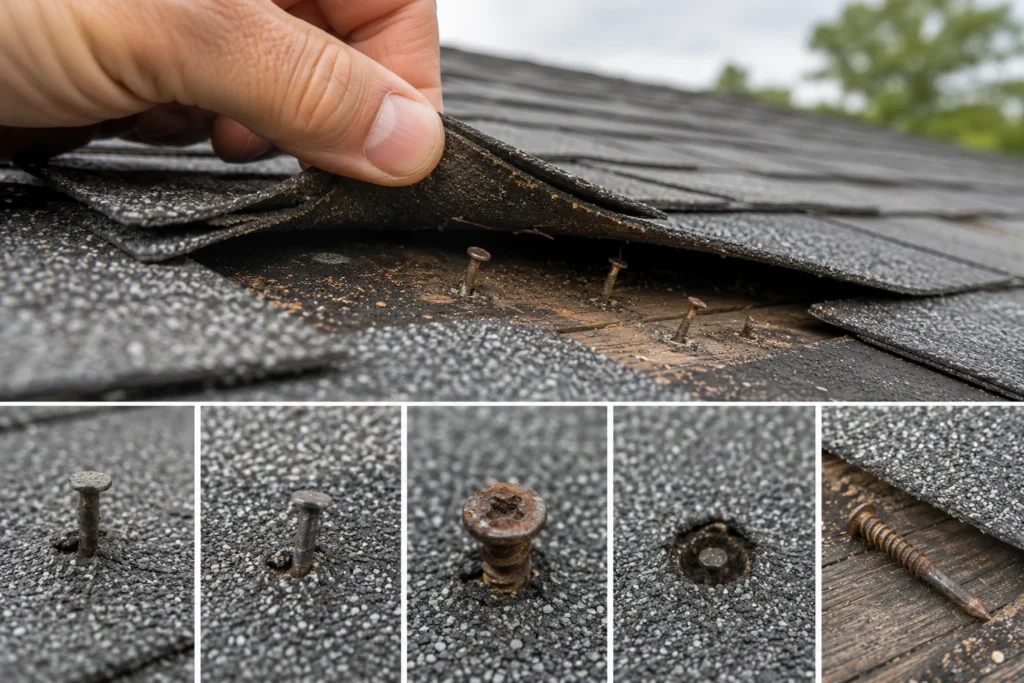
Every roofing system depends on thousands of fasteners working together to keep materials securely attached to the structure. These small components rarely attract much attention, yet they play a critical role in how well a roof performs during severe weather. Over time, wind, temperature changes, moisture, and natural expansion and contraction can affect fasteners in several ways.
Common issues include:
- Nail pops
- Loose roofing nails
- Corroded fasteners
- Overdriven nails
- Backed-out screws
- Wind-loosened connections
A single loose fastener might not seem significant. However, when dozens or even hundreds are affected across the roof, shingles become more susceptible to wind uplift, water intrusion, and premature failure. Because fastener problems are relatively small and often hidden beneath shingles, they may receive less attention during a routine inspection. Nevertheless, they can have a substantial impact on the roof’s long-term durability.
Interior Evidence Connected to Roof Damage
One of the biggest mistakes made during roof claims is focusing exclusively on the exterior. The inside of a home frequently tells an equally important story.
Evidence that may indicate roof damage includes:
- Water stains on ceilings
- Peeling paint
- Damp insulation
- Wet drywall
- Musty odors
- Mold growth
- Darkened roof framing
- Condensation inside the attic
Water rarely travels in a straight line.
Instead, it often follows rafters, trusses, pipes, electrical wiring, or framing members before becoming visible inside the home. That means the location of an interior stain does not necessarily identify the exact location of the roof leak. A thorough inspection considers both the exterior roofing system and the interior signs of moisture intrusion before determining the scope of repairs.
Weather Events That Create Hidden Roof Damage
Every storm leaves a unique fingerprint. Two neighboring homes can experience the same hailstorm yet sustain very different levels of damage depending on roof age, construction materials, slope direction, surrounding trees, and previous repairs. Understanding how different weather events affect roofing systems helps explain what insurance adjusters miss on roof claims when damage is subtle or develops gradually.
Hail Damage
Hail is one of the leading causes of residential roof insurance claims. Large hailstones obviously create visible destruction. Smaller hailstones often produce more subtle damage.
Functional hail damage may include:
- Bruised shingles
- Granule displacement
- Asphalt fractures
- Cracked fiberglass reinforcement
- Damaged flashing
- Dented roof vents
- Soft metal impacts
Many of these conditions become worse over time. Repeated heating and cooling cycles enlarge fractures, allowing moisture to penetrate deeper into the roofing system. This delayed progression explains why some homeowners notice leaks months after the original storm.
Wind Damage
Wind rarely damages every section of a roof equally. Pressure changes around the roof create lifting forces that concentrate along edges, corners, ridges, and exposed slopes.
Wind damage commonly includes:
- Lifted shingles
- Broken adhesive seals
- Creased shingles
- Missing ridge caps
- Torn starter strips
- Detached flashing
Some shingles settle back into place after the storm. Unfortunately, they may no longer provide the same level of protection because the factory seal has already failed. This hidden weakness increases vulnerability during future storms.
Falling Tree Limbs
Tree limbs do not always create dramatic holes through a roof. Sometimes the damage is much less obvious. A heavy branch may compress roofing materials enough to crack the decking beneath while leaving only minor surface marks.
Potential hidden damage includes:
- Cracked roof decking
- Torn underlayment
- Broken flashing
- Structural shifting
- Water intrusion pathways
Without a detailed inspection, these underlying conditions may remain undiscovered until leaks begin appearing inside the home.
Flying Debris
Storms generate more than wind and rain. Loose fencing. Outdoor furniture. Roofing materials from neighboring houses. Tree branches. Construction debris. All of these objects can become airborne during severe weather. Even relatively small debris can puncture shingles, flashing, vents, or ridge caps when propelled by strong winds. Because impacts often affect isolated portions of the roof rather than large sections, careful documentation becomes especially important.
Heavy Rain
Rain itself usually isn’t the cause of roof damage. Instead, it exposes weaknesses that already exist. Water naturally seeks the easiest route into a structure. Tiny flashing separations. Lifted shingles. Compromised seal strips. Loose fasteners. Hairline punctures. Each opening provides another opportunity for moisture to enter. Repeated rainfall gradually enlarges these vulnerable areas until interior damage finally becomes visible.
Why Roofing Systems Should Be Evaluated as a Whole
A roof should never be viewed as a collection of unrelated parts. Every component works together. When one fails, others often follow. A comprehensive inspection evaluates the entire roofing system rather than focusing solely on damaged shingles.
| Roofing Component | Purpose |
| Shingles | Protect against weather exposure |
| Underlayment | Secondary moisture barrier |
| Roof Deck | Structural support |
| Flashing | Waterproof transitions |
| Fasteners | Secure roofing materials |
| Ventilation | Regulate attic temperature and moisture |
| Gutters | Direct rainwater away from the home |
| Drip Edge | Protect roof edges |
| Valleys | Channel heavy water flow |
| Soffits | Improve attic airflow |
For example, replacing damaged shingles without repairing compromised flashing or underlayment may solve today’s visible problem while leaving hidden moisture pathways untouched. Looking at the roof as a complete system produces a more accurate understanding of the property’s condition.
Cosmetic Damage vs. Functional Damage
One of the most misunderstood topics in roof insurance claims is the distinction between cosmetic damage and functional damage. The difference matters because insurance policies often treat these conditions differently. Cosmetic damage generally affects appearance without reducing the roof’s ability to protect the home.
Examples include:
- Minor discoloration
- Light scuff marks
- Small dents that do not affect performance
- Slight surface scratches
Functional damage, on the other hand, reduces the roofing system’s ability to perform its intended purpose.
Examples include:
- Torn shingles
- Lifted seal strips
- Cracked flashing
- Water infiltration
- Punctured roofing materials
- Structural weakening
Determining whether damage is cosmetic or functional requires more than a quick visual assessment. Inspectors often evaluate how the damage affects water resistance, structural stability, and the expected lifespan of the roofing system.
Documentation Makes or Breaks a Roof Claim
A well-documented claim is usually a stronger claim. Insurance decisions rely heavily on evidence.The more organized and complete that evidence becomes, the easier it is to demonstrate the full extent of the damage.
Useful documentation includes:
- Wide-angle photographs
- Close-up photographs
- Drone imagery
- Moisture meter readings
- Roofing contractor reports
- Independent inspection reports
- Repair estimates
- Weather records
- Video walkthroughs
- Maintenance history
Equally important is maintaining an organized claim file. Save every email. Keep copies of inspection reports. Record phone conversations, including dates and names. Store receipts for emergency repairs and temporary protection measures. These records help establish a clear timeline throughout the claims process.
Mistakes Homeowners Make During Roof Claims
Even legitimate insurance claims can become more complicated because of avoidable mistakes.
Some of the most common include:
- Waiting too long to report damage
- Beginning permanent repairs before documentation
- Throwing away damaged roofing materials
- Failing to photograph temporary repairs
- Missing policy deadlines
- Accepting the initial settlement without reviewing the estimate carefully
- Assuming every damaged component has already been identified
Taking a slower, more organized approach often leads to better decisions. When questions arise, homeowners should request clarification before signing agreements or authorizing major repairs.
Understanding Policy Language
Insurance policies contain far more detail than many homeowners realize. Several provisions directly influence roof claim settlements.
Key terms include:
Replacement Cost Value (RCV)
The estimated cost to replace damaged materials with similar quality products without subtracting depreciation.
Actual Cash Value (ACV)
Replacement cost minus depreciation based on the roof’s age, condition, and expected lifespan.
Deductible
The portion of the covered loss that remains the homeowner’s responsibility.
Exclusions
Specific circumstances or types of damage that are not covered by the policy.
Endorsements
Optional additions that modify standard policy coverage.
Matching Provisions
Some policies address whether undamaged roofing materials should also be replaced when matching products are unavailable.
Ordinance or Law Coverage
Building codes change over time. This coverage may help pay for upgrades required to meet current construction standards when repairing covered damage. Understanding these provisions helps homeowners ask informed questions throughout the claims process. It also provides valuable context when comparing repair estimates, reviewing settlement offers, or evaluating whether additional inspections may be appropriate.
How Public Adjusters Evaluate Roof Claims Differently
By the time an insurance estimate arrives, many homeowners assume the process is almost finished. Sometimes it is. Other times, the estimate represents only the first evaluation of the damage. A public adjuster approaches a roof claim from a different perspective. Rather than preparing an estimate for the insurance company, a public adjuster performs an independent assessment on behalf of the policyholder. The objective is to identify the complete scope of covered damage, document it thoroughly, and present supporting evidence during the claims process.
A comprehensive evaluation often includes:
- A detailed roof inspection
- Review of the insurance policy
- Independent damage documentation
- High-resolution photography
- Moisture inspections
- Review of contractor findings
- Preparation of a detailed repair estimate
- Ongoing communication during claim negotiations
This process is not about increasing a claim beyond what is justified. It is about ensuring that every covered component receives proper consideration. When additional damage is discovered, clear documentation helps explain why supplemental repairs may be necessary.
Technology Is Making Roof Inspections More Accurate
Roof inspections have changed dramatically over the past decade. Modern technology allows inspectors to collect more information while improving both safety and precision. Several tools have become increasingly valuable.
Drone Inspections
High-resolution drones provide detailed aerial photographs of roofing systems that may be difficult or unsafe to access.
Advantages include:
- Complete roof coverage
- Detailed imagery
- Safer inspections
- Easier documentation
- Better before-and-after comparisons
Drone photography also creates a permanent visual record that can be referenced throughout the claim.
Thermal Imaging
Not every leak is visible. Thermal imaging cameras detect temperature differences that may indicate hidden moisture beneath roofing materials or inside attic spaces. Although thermal imaging alone does not diagnose every problem, it provides another layer of information that helps inspectors identify areas requiring closer examination.
Moisture Detection Equipment
Electronic moisture meters can locate trapped water inside roofing materials, insulation, drywall, and wood framing. Finding hidden moisture early often prevents more extensive structural deterioration later.
AI-Assisted Roof Measurements
Modern estimating software now uses aerial imagery and advanced algorithms to calculate roof dimensions with impressive accuracy. These measurements improve estimate consistency while reducing human error. When combined with a physical inspection, digital measurement tools provide a more complete understanding of repair requirements.
When a Second Roof Inspection Makes Sense
Many homeowners believe requesting another inspection means challenging the insurance company. That is not necessarily true. A second inspection simply provides another opportunity to evaluate the evidence.
It may be appropriate when:
- The settlement appears significantly lower than contractor estimates.
- A roofing contractor identifies additional storm damage.
- Interior leaks appear after the initial inspection.
- Hidden moisture is discovered.
- Roofing materials are removed during repairs and concealed damage becomes visible.
- Additional documentation becomes available after the original inspection.
For homeowners in Desoto, requesting another evaluation is often a reasonable step when new information suggests the original inspection may not have captured the entire scope of the loss.
Preventing Problems Before the Next Storm
While no roof can eliminate every weather-related risk, regular maintenance can significantly reduce future problems. Preventive maintenance also creates valuable documentation that may support future insurance claims.
Consider the following routine:
- Schedule a professional roof inspection each year.
- Clean gutters and downspouts regularly.
- Remove tree limbs hanging above the roof.
- Repair damaged flashing promptly.
- Inspect attic ventilation annually.
- Photograph the roof before storm season.
- Address small leaks immediately.
- Maintain organized maintenance records.
Consistent maintenance extends roof life while making it easier to demonstrate the roof’s condition before a loss occurs.
How Homeowners Can Strengthen Their Roof Insurance Claim
Storm damage creates enough stress without adding unnecessary confusion. A few simple habits can make the claims process much smoother. The following checklist provides a practical starting point.
| Action | Benefit |
| Report the claim promptly | Helps satisfy policy reporting requirements |
| Photograph all visible damage | Preserves evidence before repairs begin |
| Record videos of affected areas | Adds valuable context |
| Keep receipts for emergency repairs | Documents reimbursable expenses when covered |
| Obtain written contractor reports | Supports repair recommendations |
| Save all communication | Establishes a clear claim timeline |
| Review the insurance policy | Clarifies available benefits |
| Keep damaged materials when practical | Preserves physical evidence |
| Maintain weather records | Helps document the storm event |
Strong documentation tells a consistent story from the first inspection through the final repair. The more organized the information becomes, the easier it is to explain why specific repairs are necessary.
Common Reasons Roof Claims Become Underpaid
Not every underpaid roof claim results from a disagreement over coverage. More often, the issue begins with incomplete information. If an inspection overlooks damaged components or an estimate does not fully reflect repair costs, the settlement may not accurately represent what is needed to restore the home. One common issue involves focusing only on the most visible damage. Missing shingles are easy to identify. Hidden problems are not. Moisture trapped beneath the underlayment, weakened decking, damaged flashing, compromised ventilation, and deteriorated fasteners may require additional investigation before they become apparent.
Construction costs also change over time. Material prices fluctuate. Labor rates increase. Permit fees vary. Building code requirements evolve. If repair estimates rely on outdated pricing information, homeowners may discover that the approved settlement no longer covers current replacement costs. Building code compliance presents another challenge. Older roofs were often installed under previous construction standards. Today’s repairs may require upgraded flashing, improved fastening systems, enhanced ventilation, or additional moisture barriers. Depending on the insurance policy, ordinance or law coverage may help pay for these required improvements. Documentation remains one of the strongest tools available to homeowners. Photographs. Inspection reports. Weather records. Contractor estimates. Repair invoices. Communication logs. Together, these records create a clear timeline that supports discussions if additional damage is discovered later.
Why Experience Matters in Complex Roof Claims
Not every roof claim follows the same path. Some involve multiple storms over several years. Others include aging roofing materials, previous repairs, or complex architectural designs. Commercial properties may contain membrane roofing systems, rooftop HVAC equipment, drainage systems, skylights, and multiple roof elevations that require additional evaluation. Older homes introduce another layer of complexity because replacement materials may no longer be available, and repairs often need to comply with updated building codes. Experience becomes increasingly valuable in these situations because subtle indicators of damage are easier to overlook.
Interestingly, many of the same investigative principles apply Inside the Role of a Fire Insurance Adjuster. Whether evaluating roof damage, fire damage, or water intrusion, the process depends on careful documentation, thorough inspections, accurate estimates, and a clear understanding of policy language before settlement discussions begin. Ultimately, attention to detail often determines whether hidden damage is discovered early or remains unnoticed until much larger problems develop.
Conclusion
A roof is far more than a layer of shingles protecting a home from rain and wind. It is a complete system made up of structural decking, underlayment, flashing, fasteners, ventilation components, gutters, and drainage features that must work together to keep moisture out and preserve the integrity of the structure. Understanding what insurance adjusters miss on roof claims helps homeowners appreciate why a careful inspection matters so much after a severe storm. Hidden hail bruises, lifted shingles, damaged flashing, torn underlayment, weakened roof decking, compromised fasteners, and subtle moisture intrusion may not always be visible during an initial inspection, yet each can significantly affect repair costs and the long-term performance of the roof.
While many insurance inspections are conducted professionally and thoroughly, no inspection can eliminate every possibility of concealed damage. That is why homeowners benefit from documenting the property carefully, reviewing their insurance policy, comparing repair estimates, and asking questions whenever findings appear incomplete. A well-organized claim supported by photographs, contractor reports, maintenance records, and clear communication often provides a stronger foundation for reaching a fair outcome.
Most importantly, do not assume that visible damage tells the entire story. Storms can affect roofing systems in ways that take weeks or even months to become apparent. Remaining proactive after a major weather event can help identify hidden issues before they develop into larger structural problems. For homeowners in Desoto, taking the time to understand the roof claims process today can reduce uncertainty tomorrow. Whether the damage is obvious or hidden beneath the surface, a thorough inspection and complete documentation remain two of the most effective ways to protect your home and pursue a fair insurance settlement.
FAQs
Insurance adjusters may overlook hidden issues such as bruised shingles, damaged underlayment, compromised flashing, moisture intrusion, or weakened roof decking that aren’t immediately visible.
Yes. Some forms of storm damage, especially moisture intrusion and weakened roofing materials, may not become noticeable until weeks or even months after the weather event.
A second inspection can be beneficial if you believe damage was overlooked or if a roofing contractor identifies additional issues not included in the original estimate.
Not necessarily. The need for replacement depends on the extent of functional damage, the roof’s condition, and whether repairs can restore its performance.
Flashing protects vulnerable areas where water is most likely to enter the home. Even minor flashing damage can eventually lead to leaks and costly repairs.
Keep photographs, inspection reports, repair estimates, receipts, weather information, emails, and notes from conversations with your insurance company and contractors.
Yes. Ceiling stains, attic moisture, and damp insulation often point to roof-related water intrusion, even if the exterior damage is difficult to see.
Report the damage promptly, document everything thoroughly, save repair receipts, maintain communication records, and obtain detailed inspections from qualified professionals.
Cosmetic damage mainly affects appearance, while functional damage impacts the roof’s ability to protect the home from weather and moisture.
Most experts recommend a professional roof inspection at least once a year and after major hailstorms, windstorms, or other severe weather events.